


 Español
 Deutsch
 عربى
عربى
1. Introduction In modern society, with the increasing trend of population aging and the accelerating pace of life, the importance of means of transpo...
READ MOREPrice of Mobility Scooters 2026: Full Guide to Costs, Buying Tips and Models
You are comparing a few mobility scooters online. One costs $1,495, another is $2,895, and a third is $3,650. Is the most expensive model always the right choice? In 2026, the price of mobility scooters normally falls between $800 and $4,500 for new units. The wide range reflects a simple truth: scooters are designed for different jobs. A lightweight folding unit built for neighborhood errands is not the same machine as a heavy-duty 4-wheel scooter made for ramps and uneven pavement.
When you know what each price band includes, you can quickly judge whether a quote is fair. The following guide compares common categories, explains the factors that shift the price, and points out where buyers often overpay.
Key takeaway: For most people riding on flat pavement, a scooter in the $1,200-$2,200 comfort/travel band is enough. You pay more only when your terrain or range demands it, not because a higher price automatically means a better fit.
Typical Mobility Scooter Price Ranges in 2026
Retail prices for new mobility scooters cluster into four bands. The table below shows what each band delivers, from a basic folding model to a high-power all-terrain unit.
Quick reference: A comfortable 4-wheel mobility scooter with a basket typically retails between $1,200 and $2,200. A folding scooter with a 20 km range sits closer to $1,500 to $2,800.
| Category | Price Band | What You Get |
|---|---|---|
| Lightweight folding | $800 - $1,500 | Folding frame, 10-15 km range, airline-friendly weight |
| Comfort / Travel | $1,200 - $2,200 | Padded seat, storage basket, LED headlight, 15-20 km range |
| Long Range | $1,500 - $2,800 | 20 km+ range, larger battery, stronger motor |
| Heavy-Duty / All-Terrain | $2,500 - $4,500 | High-power motor, 12%+ climbing capacity, reinforced frame |
For most first-time buyers, the comfort/travel band is the most practical starting point. A scooter like the folding lightweight mobility scooter with basket fits inside this range and covers the daily tasks most people need: going to the store, visiting friends, or moving around the neighborhood. Its 4-wheel configuration and folding frame keep it stable and easy to store.
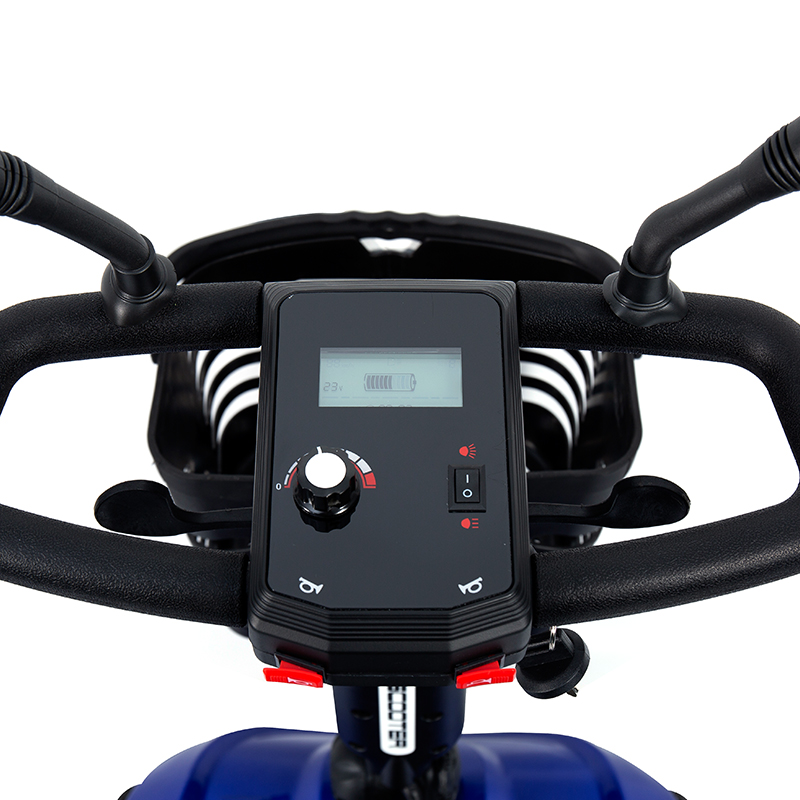 Foldable 4-Wheel Mobility Scooter with Basket for Daily ErrandsThis folding steel-frame scooter offers stable 4-wheel handling and a basket for practical trips. It fits the comfort/travel range, covering store visits, friends, and neighborhood rides with ease.View Product →
What Drives the Price of a Mobility Scooter?
Two scooters can look nearly identical at first glance, yet differ by hundreds of dollars. The price gap usually comes from four components.
Battery Capacity and Motor Power
The battery pack is the single largest cost item in a mobility scooter. A 12V 20Ah sealed battery costs less than a 24V 40Ah lithium pack, and that difference is passed to the buyer. Motor power follows the same rule. A 300W motor handles flat pavement comfortably. A scooter with a 1000W motor and high climbing capacity uses a larger motor and a stronger controller, which raises the price. If your home has a driveway with a slope, the extra power is a justified expense.
Frame Construction and Portability
Folding scooters require aluminum or steel frames with additional hinges and locking mechanisms. The added engineering explains why a folding model costs more than a fixed-frame scooter of similar size. At the same time, the heavy-duty segment uses reinforced frames for greater load capacity. In the middle of the range, a scooter like the tourist mobility scooter with LED headlight and basket balances portability with stability, which is why travel models occupy a distinct price band.
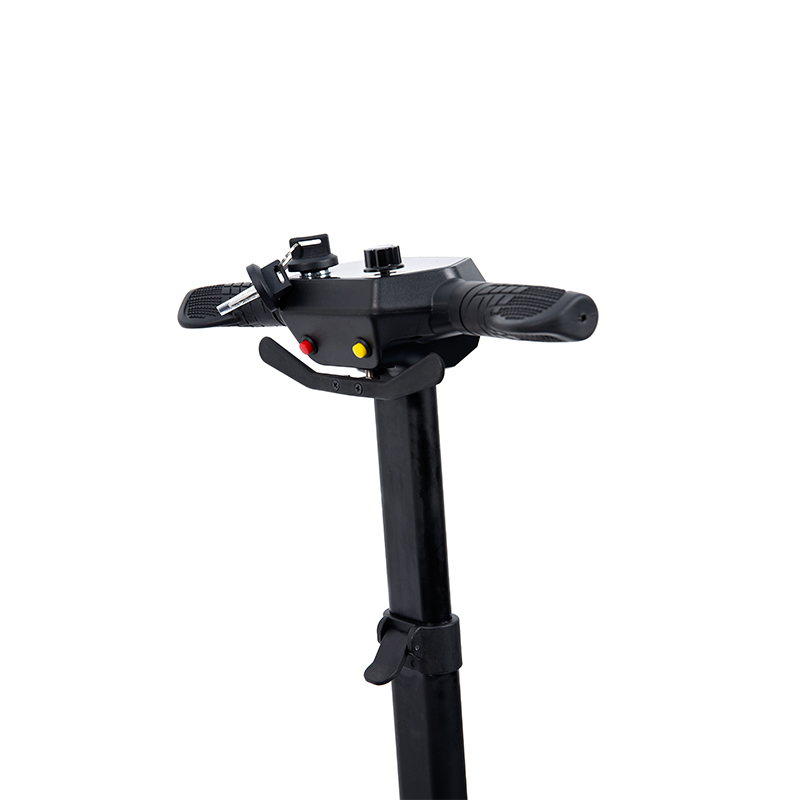 Lightweight Aluminum Tourist Scooter with LED Light and BasketBalancing portability and stability, this aluminum scooter folds in seconds for travel. Its LED headlight and basket enhance safety and convenience, making it a solid mid-range choice.View Product →
Comfort Features and Daily Usability
Padded seats with adjustable armrests, telescoping steering columns, LED headlights, and storage baskets are standard on mid-range scooters. On budget models, these are often optional or absent. These features matter more than people think. A good seat reduces fatigue after 30 minutes of riding, and a basket prevents you from balancing grocery bags on your lap.
Certification and After-Sales Support
A manufacturer that documents certifications, provides export paperwork, and keeps spare parts in stock has higher operating costs than an unknown supplier. That difference appears in the price. For B2B buyers and distributors, these factors matter as much as the sticker price because they affect how quickly a scooter can be repaired after it reaches the market.
How to Choose the Right Scooter Without Overpaying
The most common purchasing mistake is buying more machine than you need. A buyer who only travels to the local pharmacy does not need a 1000W all-terrain scooter. The opposite mistake is choosing a budget model for a use case that demands more power, which leads to premature motor and battery failure. Here is a simple decision process.
- Define your terrain first. Flat pavement, sloped driveways, and rough sidewalks set the minimum motor power and climbing capacity you need.
- Measure daily travel distance. A 10 km range covers most errands. A 20 km range gives you flexibility for multi-stop trips without charging mid-day.
- Check weight capacity and storage. The frame and suspension must support your weight. The scooter must fit through doorways and into the trunk of your vehicle.
- Compare total cost of ownership. Ask the supplier about battery replacement cost, tire availability, and the average turnaround time for spare parts.
Before you buy, read this guide on choosing the right mobility scooter for your lifestyle. It walks through the most common use cases and how to match them to a specific model.
For buyers dealing with slopes or uneven pavement, the heavy-duty 4-wheel folding scooter with 12% climbing capacity costs more upfront, but it directly addresses the terrain factor. Choosing a scooter with sufficient climbing ability the first time is usually cheaper than upgrading later.
 Heavy-Duty 4-Wheel Scooter with 12-Degree Climbing AbilityBuilt with a reinforced steel frame and strong motor, this scooter handles slopes up to 12 degrees. It's a wise upfront investment for terrain challenges, avoiding later upgrade costs.View Product →
Upfront Price vs. Long-Term Ownership Costs
The purchase price is not the final amount you will spend. Two scooters at the same price can have very different three-year totals. Here is what to track after the initial purchase:
- Battery replacement: A typical mobility scooter battery lasts 18 to 36 months. A new set costs between $200 and $450, depending on whether it is lithium or sealed lead-acid.
- Tires and wear parts: Solid tires last longer than pneumatic tires, but both need rotation or replacement over time.
- Repair turnaround: Suppliers that stock replacement parts can repair a scooter in a few days. A model with a two-week parts wait is a hidden cost, especially if it is the user's only way to get around.
- Electrical components: Controllers and throttles have a limited service life. The quality of wiring and connectors becomes visible after two years of use.
Heins Medical Equipment publishes product manuals for several models, including the YL07 and YL985S, which let buyers verify specifications and maintenance requirements before placing an order.
Frequently Asked Questions About Mobility Scooter Prices
Q1: Are mobility scooters cheaper than electric wheelchairs?
Generally yes. Electric wheelchairs in the same comfort class often cost 10-30% more than a comparable mobility scooter. The exact difference depends on battery type, motors, and accessories.
Q2: Can insurance or Medicare cover the price of a mobility scooter?
In some countries, yes, if a doctor deems the scooter medically necessary and prescribes it. Eligibility rules vary by region and policy. Check with your insurer before buying.
Q3: Is it better to buy a used mobility scooter instead of a new one?
Used scooters are cheaper, but the savings can disappear if the battery needs replacement. A used scooter that costs $700 but needs a $350 battery is not a bargain. Only buy used if you can test the scooter and verify the battery age.
Q4: How much does a replacement mobility scooter battery cost?
Between $200 and $450 for a genuine replacement set. Lithium batteries cost more upfront but offer longer service life than sealed lead-acid packs.
Q5: Do folding mobility scooters cost less than standard models?
Folding scooters usually cost less than heavy-duty models, but more than a basic fixed-frame scooter. The extra engineering goes into the folding mechanism. If you do not need to transport the scooter often, a standard comfort model may give better value.
When you have narrowed down a category and want a delivery estimate or a wholesale inquiry, contact Heins Medical Equipment directly. We can help you match the right scooter to your use case and budget.
PREV:Four-Wheel Scooters: Types, Features, and Complete Buying Guide for Seniors
NEXT:Power Wheelchair Ramps for Home: Complete Sizing, Safety, and Buying Guide
NEXT:Power Wheelchair Ramps for Home: Complete Sizing, Safety, and Buying Guide
Interested in cooperation or have questions?
News

-
The information provided on this website is intended for use only in countries and jurisdictions outside of the People's Republic of China.
-
Office Address
Room 315, building5, No.45 Songbei Road, Suzhou area, China Pilot Free Trade Zone
-
Factory Address
No. 2 Shanyan Road, Huzhen Town, Jinyun Country, Lishui, Zhejiang, China
-
Mobile Phone
+86 137 7606 7076
-
Email
taylor.liu@heinsmed.com
Stay Connected
lf you can't find the answer you're looking for, chat with our friendly team.
Mobile
Copyright © Suzhou Heins Medical Equipment Co., Ltd. All Rights Reserved.
Custom Mobility Scooters for Elderly Suppliers
Custom Mobility Scooters for Elderly Suppliers