


 Español
 Deutsch
 عربى
عربى
1. Introduction In modern society, with the increasing trend of population aging and the accelerating pace of life, the importance of means of transpo...
READ MOREFour-Wheel Scooters: Types, Features, and Complete Buying Guide for Seniors
Your knees ache after two hours of walking, or your balance feels unpredictable when you stand up. Yet you still want to visit the market, meet friends for lunch, or do a lap around the park. A four-wheel scooter can fill that gap. Unlike three-wheel designs, which prioritize tight turning over confidence, four-wheel scooters distribute weight across all four corners, lowering the risk of tipping on uneven pavement, ramps, or curbs.
Why Four-Wheel Scooters Are a Reliable Choice
A four-wheel scooter is essentially a powered mobility platform with two wheels up front and two in the rear. That simple arrangement gives it a wider footprint than a three-wheel scooter, which translates into better lateral stability. If you have ever felt that a three-wheel model wobbled during a turn or on slightly uneven ground, you already understand why the four-wheel configuration is often preferred.
Look at the practical differences:
- Turning radius: three-wheel models turn tighter, but four-wheel models feel more secure at moderate speeds.
- Stability: on slopes, curbs, and outdoor terrain, four-wheel scooters are far less likely to tip.
- Weight distribution: whether you are carrying groceries or rely on a heavier seat, the four-wheel base supports weight more evenly.
For older adults who may not have the reflexes or leg strength to correct a shift in balance, the safety margin that comes from a four-wheel base is worth more than the convenience of a tighter turning circle.
Main Types of Four-Wheel Scooters
Not all four-wheel scooters are built for the same purpose. If you are starting your search, the biggest mistake is assuming that any model with four wheels will behave the same. The category actually splits into several practical sub-groups.
Portable and Folding Models
These models are designed to be disassembled or folded into pieces that can fit into a car trunk, a closet, or an airline-accessible suitcase-style package. They usually use lighter batteries and narrower frames, making them well suited to people who ride short distances and value storage. The YL985S portable folding scooter is a good example: it uses a lightweight frame and folds into a compact footprint for travel or day trips.
View YL985S Portable Folding Scooter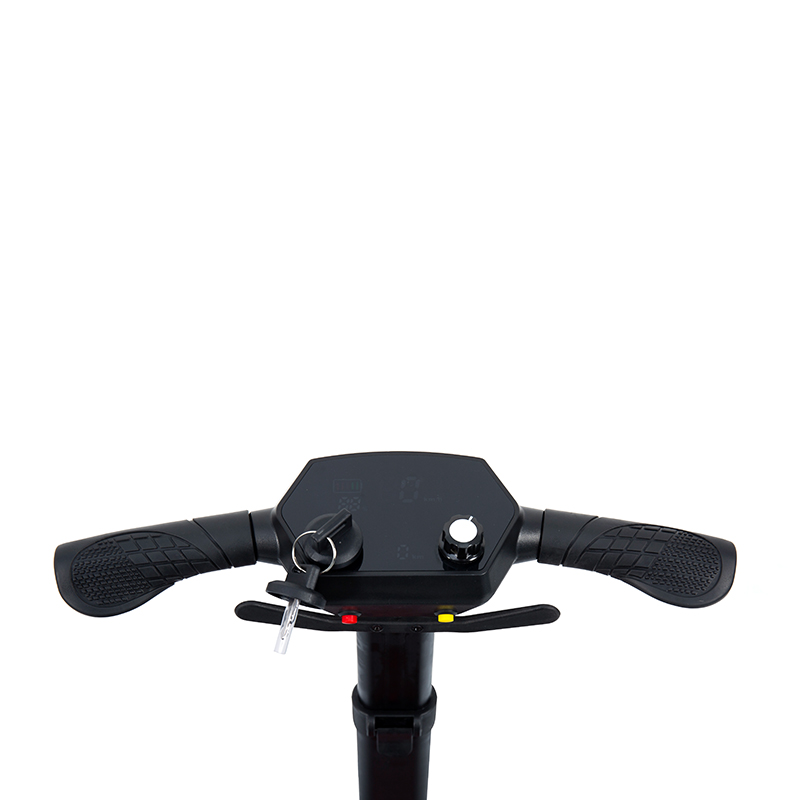 Lightweight Folding Mobility Scooter for Travel and StorageThis compact scooter features a lightweight aluminum frame and quick-fold design, making it easy to store in car trunks. Suitable for short trips and travel, it balances portability with reliable performance.View Product →
Full-Size and Long-Range Models
Full-size scooters have heavier frames, larger batteries, and generally more comfortable seats. They are built for daily use in the neighborhood or around a retirement community. The YL09S long-range folding scooter is a good middle-ground example: it offers approximately 20 km of driving range, supports adult and senior riders, and still folds away when the trip is done.
View YL09S Long-Range Folding Scooter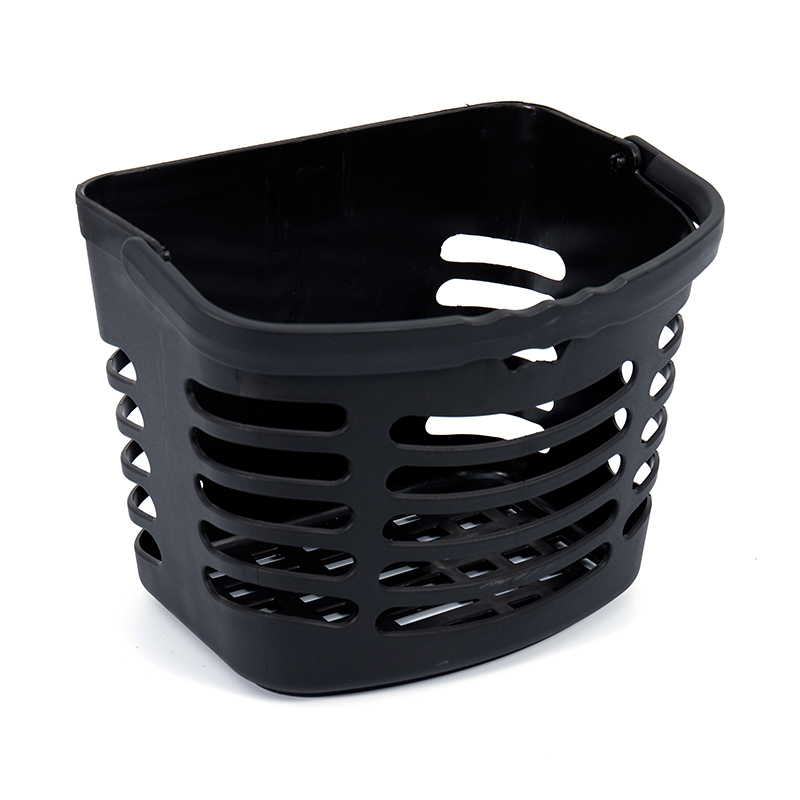 Durable Foldable Scooter with 20km Range for Daily UseBuilt on a rugged steel frame, this scooter offers a comfortable seat and up to 20km per charge. Ideal for errands and leisure, it includes practical features like a storage basket and safety lights.View Product →
All-Terrain and Off-Road Models
If your destinations include gravel paths, grass, or unpaved trails, choose a rugged four-wheel scooter with higher ground clearance and larger tires. These models usually come with more powerful motors and heavier frames. The TK500 heavy-duty all-terrain scooter is built for the outdoors with a high-power motor and a four-wheel platform designed for uneven surfaces.
View TK500 Heavy-Duty All-Terrain Scooter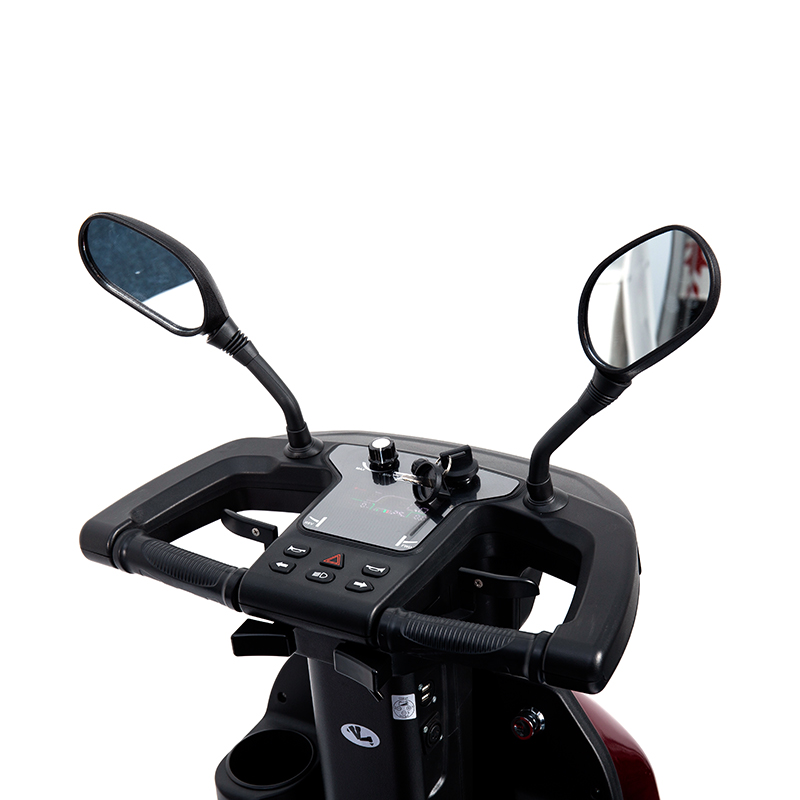 Heavy-Duty All-Terrain Scooter for Outdoor and Rough SurfacesDesigned for uneven terrain, this four-wheel scooter uses a high-power motor, robust suspension, and off-road tires. It delivers strong traction and comfort for outdoor adventures or work environments.View Product →
What to Consider Before Buying a Four-Wheel Scooter
Before you place an order or recommend a model to a family member, take a closer look at five buying criteria that really matter.
Weight Capacity and Seat Sizing
Every scooter has a maximum load rating. If the recommended rider weighs close to that limit, expect the motor and battery to work harder, which shortens range and accelerates wear. A common standard for full-size models is 300 lb, while heavy-duty models can support 400 lb or more. Check the declared weight capacity first.
Battery Range and Charging
Battery capacity is usually expressed in how many kilometers or miles you can drive on a full charge. Many models offer between 12 km and 25 km on a single charge. If you mainly run local errands, 15 km is often enough. If you plan to roam a large park or use it for extended outings, look for at least 20 km.
Turning Radius and Maneuverability
Four-wheel scooters turn wider than three-wheel models. Check whether the scooter can navigate your hallway, doorways, and elevators. Typical four-wheel turning radius is between 45 and 70 inches. If your home is very compact, measure your corridors before committing.
Portability and Transport
How often will you transport the scooter? If you frequently use a wheelchair-accessible van or need to put the scooter in a trunk, look for folding models or models that can split into sections. Folding units are designed with this exact scenario in mind.
For a deeper look at matching a scooter to your lifestyle, read our guide on how to choose the right mobility scooter for your lifestyle.
Performance and Safety Features That Matter
Beyond the basics, there are a few specifications that directly affect safety and usability on a four-wheel scooter.
Climbing Capacity
Grade percentages tell you how steep a hill the scooter can climb. A modest 8% grade is roughly the slope of a standard driveway or a gentle ramp. A scooter rated for 12%, like the YL08S, will handle steeper driveways with less strain on the motor.
Ground Clearance
If you plan to ride on grass, packed dirt, or over small roots, ground clearance becomes important. A low clearance can cause the underside to drag and reduce stability. Off-road models usually offer more height and aggressive tire tread.
Braking and Speed
Most four-wheel mobility scooters are speed-limited to about 4-5 mph for safety. At those speeds, the most important factor is how quickly and smoothly the scooter comes to a stop. Automatic electromagnetic brakes, which engage when you let go of the throttle, are a standard feature on modern models and should be required.
All-Terrain Considerations
If you are specifically interested in gravel and uneven terrain, tire composition and suspension matter more than raw motor power. Read our full article on the best all-terrain mobility scooters for gravel for a deeper breakdown.
Four-Wheel Scooter Pricing Expectations
Four-wheel scooter prices vary widely based on type, battery, and build quality. You will generally find:
- Entry-level portable models: $850 - $1,200
- Mid-range full-size models: $1,500 - $2,500
- Heavy-duty or all-terrain models: $3,000 - $6,000+
When you compare quotes from original equipment manufacturers, remember that a low price can mean a shorter service life, a less comfortable seat, or a battery that degrades faster. Ask the supplier for details on motor specifications, controller quality, and battery chemistry.
Frequently Asked Questions About Four-Wheel Scooters
Q1: Are four-wheel scooters safer than three-wheel models?
Yes, in terms of lateral stability. The wider distance between wheels and the rear axle reduces the risk of tipping sideways during turns or on uneven ground. If you plan to ride outdoors, a four-wheel scooter is usually the safer choice.
Q2: What is the maximum speed and range of a four-wheel scooter?
Recreational and medical mobility scooters are electronically limited to roughly 4-5 mph for safety. Battery range varies from about 10 km to 30 km, with 20 km being a common benchmark for comfortable daily use.
Q3: How long do four-wheel mobility scooters last?
With regular maintenance and a high-quality battery, a well-built scooter can last between 3 and 7 years. Battery life depends on distance driven, temperature, and whether you choose lithium-ion or sealed lead-acid. Lithium batteries offer lighter weight and more charge cycles.
Q4: Can I take a four-wheel scooter on an airplane?
FAA rules generally allow lithium-ion batteries up to a certain watt-hour capacity to be carried as checked luggage. You will need to plan ahead with the airline and check the specific model restrictions before you travel.
Choosing a four-wheel scooter is not about picking the best-looking model on the internet. It is about matching the scooter to your body, your environment, and the trips you actually take. Start by measuring your daily route, checking your doorway widths, and asking the manufacturer about weight capacity, climbing ability, and real-world range. Then compare models that are designed for your situation. That disciplined approach will protect you from poor purchasing decisions and give you years of reliable, comfortable mobility.
PREV:No previous article
NEXT:Price of Mobility Scooters 2026: Full Guide to Costs, Buying Tips and Models
NEXT:Price of Mobility Scooters 2026: Full Guide to Costs, Buying Tips and Models
Interested in cooperation or have questions?
News

-
The information provided on this website is intended for use only in countries and jurisdictions outside of the People's Republic of China.
-
Office Address
Room 315, building5, No.45 Songbei Road, Suzhou area, China Pilot Free Trade Zone
-
Factory Address
No. 2 Shanyan Road, Huzhen Town, Jinyun Country, Lishui, Zhejiang, China
-
Mobile Phone
+86 137 7606 7076
-
Email
taylor.liu@heinsmed.com
Stay Connected
lf you can't find the answer you're looking for, chat with our friendly team.
Mobile
Copyright © Suzhou Heins Medical Equipment Co., Ltd. All Rights Reserved.
Custom Mobility Scooters for Elderly Suppliers
Custom Mobility Scooters for Elderly Suppliers