


 Español
 Deutsch
 عربى
عربى
1. Introduction In modern society, with the increasing trend of population aging and the accelerating pace of life, the importance of means of transpo...
READ MOREHow to Choose the Right Mobility Scooter for Your Lifestyle and Mobility Needs
Understanding Mobility Scooters and Who They Rely On Them
A mobility scooter is a powered device built to restore independence for people who find walking long distances difficult, painful, or unsafe. Unlike a wheelchair, most scooters are operated with a tiller and hand controls rather than a joystick, which makes them approachable for users who have full upper-body strength but limited stamina or balance.
The people who benefit most fall into a few broad groups: individuals recovering from joint replacement surgery, people managing chronic conditions such as arthritis or cardiovascular limitations, older adults who want to stay active in their community, and anyone who needs extra support for errands, travel, or outdoor recreation. Understanding which group you fall into is the first step toward narrowing down the right category of scooter.
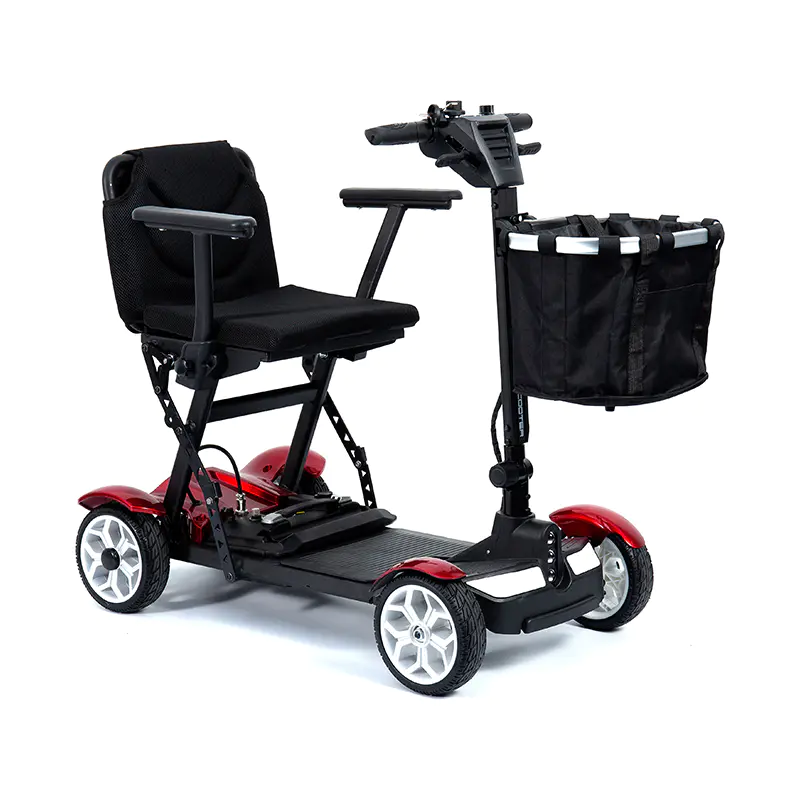
Because these devices vary so widely in size, weight capacity, and portability, the "best" scooter is not a single model but the one that matches your daily routine, the terrain you cover, and how often the unit needs to be transported.
Key Types of Mobility Scooters
Manufacturers generally group scooters into three functional categories. Each is engineered around a different priority: portability, everyday balance, or maximum durability.
| Category | Typical Weight Capacity | Best Use Case | Portability |
|---|---|---|---|
| Travel / Folding | 250 - 300 lbs | Airports, trips, tight indoor spaces | High - folds or disassembles quickly |
| Mid-Size | 300 - 400 lbs | Daily errands, mixed indoor/outdoor use | Moderate - splits into a few pieces |
| Heavy-Duty | 400 - 500+ lbs | Rugged terrain, larger users, extended range | Low - typically requires a ramp or lift |
Travel-class units prioritize a low overall weight so a single person can lift the components into a car trunk. Mid-size scooters strike a balance between stability and storage convenience, while heavy-duty platforms trade portability for a wider wheelbase, larger tires, and a more powerful motor that can handle inclines and uneven ground.
Essential Features to Evaluate Before Buying
Once you know which category fits your lifestyle, compare specific features rather than relying on general marketing descriptions. An electric mobility scooter can look similar on the outside while performing very differently once you factor in ground clearance, turning radius, and seat adjustability.
- Turning radius - a tighter radius makes indoor navigation through doorways and hallways far easier.
- Ground clearance - higher clearance reduces the risk of the frame scraping on uneven sidewalks or thresholds.
- Seat type - captain's chairs with adjustable armrests and lumbar support suit longer trips better than basic bench seats.
- Tire type - pneumatic tires absorb shock on rough pavement, while solid tires need less maintenance and never go flat.
- Control layout - delta-style tillers with dual hand levers are generally easier for users with limited grip strength.
- Lighting and signals - headlights, tail lights, and turn indicators matter for anyone using a scooter after dusk or near traffic.
It helps to physically sit in a unit before purchase whenever possible, since seat depth and armrest height affect comfort far more than spec sheets suggest.
Battery Range and Motor Performance Explained
Range anxiety is one of the most common concerns among new scooter owners. Most consumer-grade scooters use sealed lead-acid or lithium batteries, and the difference between the two affects both range and portability.
Sealed Lead-Acid
Lower upfront cost, heavier battery pack, typically 10 to 15 miles of range per charge, and a shorter overall lifespan of roughly one to two years with regular use.
Lithium-Ion
Higher upfront cost, roughly half the weight of lead-acid packs, often 15 to 25 miles of range, and a longer service life that can exceed three years with proper charging habits.
Motor wattage also matters for hill climbing and stop-and-go control. A motor in the 300 to 400 watt range is generally adequate for flat suburban routes, while inclines steeper than a gentle ramp usually call for something closer to 500 watts or more to maintain a steady, controlled speed rather than straining the drivetrain.
Comfort, Seating, and Ergonomics
Comfort is not a luxury add-on; it directly affects how long someone is willing to stay out and active. Prolonged use on a poorly padded or narrow seat can lead to pressure discomfort, especially for users who already manage joint pain.
Look for adjustable seat height so your knees sit at a comfortable angle relative to the footrest, swivel seats that make it easier to transfer on and off, and armrests that flip up out of the way. Suspension, even a basic front-fork design, noticeably smooths out the ride on brick paths, gravel, or uneven curbs.
A scooter that feels comfortable for a five-minute test ride in a showroom does not always feel the same after thirty minutes of real-world errands. Testing on varied surfaces, not just a smooth showroom floor, gives a more accurate impression.
Terrain and Portability Considerations
How a scooter breaks down for transport is just as important as how it performs while riding. The diagram below outlines the general disassembly workflow used by most travel and mid-size scooters when loading into a vehicle.
Heavier, heavy-duty models generally skip this step-by-step breakdown entirely and instead rely on a vehicle ramp, a hitch-mounted carrier, or a scooter lift, since their components are too heavy to lift individually. Matching the disassembly method to your actual vehicle and physical capability prevents a scooter from becoming difficult to transport after purchase.
Maintenance and Longevity Tips
Routine maintenance extends both battery life and mechanical reliability. Most of the following tasks take only a few minutes but are easy to overlook once a scooter becomes part of daily routine.
- Charge the battery fully after each significant outing rather than letting it sit at a low charge for days.
- Check tire pressure monthly if the scooter uses pneumatic tires, since underinflation increases motor strain.
- Wipe down the frame and undercarriage after riding in wet or muddy conditions to prevent corrosion.
- Inspect brake response and tiller responsiveness every few weeks, particularly before longer trips.
- Store the scooter in a temperature-stable area, since extreme heat or cold shortens battery lifespan considerably.
A scooter that receives this level of basic care typically outlasts one that is left plugged in indefinitely or stored in a garage exposed to seasonal temperature swings.
Cost Considerations and Long-Term Value
Sticker price is only part of the total cost of ownership. Replacement batteries, tires, and occasional servicing add up over several years, so it helps to think in terms of total value rather than the lowest initial price.
Entry-level units typically use lead-acid batteries and simpler frames, which lowers cost but usually means more frequent battery replacement. Mid-range models often add lithium options and better suspension. Premium units focus on extended range, higher weight capacity, and more refined seating, which suits users who plan to rely on a portable mobility scooter as a primary means of getting around rather than an occasional aid.
Financing, insurance coverage, and manufacturer warranties also factor into long-term value, so it is worth comparing warranty length on the battery separately from the warranty on the frame and motor, since these components typically fail on different timelines.
Safety Features and Best Practices
Safety features vary more between models than most buyers expect, and a few of them make a meaningful difference in everyday use rather than only in emergencies.
| Feature | Why It Matters |
|---|---|
| Automatic electromagnetic brakes | Engage the moment the throttle is released, preventing unintended rolling on slopes |
| Anti-tip wheels | Add stability when climbing curbs or ramps at an angle |
| Speed limiter switch | Lets new users cap top speed while building confidence |
| Key-operated ignition | Prevents accidental activation and adds a basic layer of theft deterrence |
Beyond built-in features, practical habits matter just as much: routinely scanning the path ahead for curb cuts, keeping both hands on the tiller in crowded areas, and avoiding sharp turns at higher speeds all reduce the chance of a tip-over, particularly on cambered sidewalks.
Frequently Asked Questions
Q1: How long does a typical mobility scooter battery last before it needs replacing?
Most batteries perform reliably for one to three years depending on chemistry and charging habits, with lithium packs generally outlasting sealed lead-acid ones under similar use.
Q2: Can a mobility scooter be taken on an airplane?
Many travel-class scooters with removable, airline-compliant batteries can be checked as luggage, but policies vary by carrier, so it is best to confirm battery type and size limits directly with the airline before flying.
Q3: What is the average top speed of a mobility scooter?
Most consumer models top out between four and eight miles per hour, with heavier-duty units sometimes reaching slightly higher speeds on flat terrain.
Q4: Do mobility scooters require a special license to operate?
In most regions no driving license is required for sidewalk or personal use, though local regulations can vary, particularly if the scooter will be used on public roads.
Q5: How much weight can a standard mobility scooter carry, including cargo?
Weight capacity typically ranges from around 250 pounds on lightweight travel models up to 500 pounds or more on heavy-duty platforms, and this figure usually includes any bags or cargo placed on the scooter.
Q6: How often should tires be inspected?
A monthly check is generally sufficient for pneumatic tires, while solid tires mainly need a visual inspection for cracking or uneven wear every few months.
PREV:How to Diagnose Mobility Scooter Error Codes and Extend Your Machine's Life
NEXT:How to Choose a Lightweight Folding Mobility Scooter for Airline and Car Travel
NEXT:How to Choose a Lightweight Folding Mobility Scooter for Airline and Car Travel
Interested in cooperation or have questions?
News

-
The information provided on this website is intended for use only in countries and jurisdictions outside of the People's Republic of China.
-
Office Address
Room 315, building5, No.45 Songbei Road, Suzhou area, China Pilot Free Trade Zone
-
Factory Address
No. 2 Shanyan Road, Huzhen Town, Jinyun Country, Lishui, Zhejiang, China
-
Mobile Phone
+86 137 7606 7076
-
Email
taylor.liu@heinsmed.com
Stay Connected
lf you can't find the answer you're looking for, chat with our friendly team.
Mobile
Copyright © Suzhou Heins Medical Equipment Co., Ltd. All Rights Reserved.
Custom Mobility Scooters for Elderly Suppliers
Custom Mobility Scooters for Elderly Suppliers