


 Español
 Deutsch
 عربى

1. Introduction In modern society, with the increasing trend of population aging and the accelerating pace of life, the importance of means of transpo...
READ MOREMobility Scooter Selection Guide: Types, Specs, and Practical Buying Tips
A mobility scooter can restore independence, but the wrong choice can make daily errands harder. The best model is not the one with the largest motor or the longest feature list. It is the one that fits your body, storage space, usual routes, and transport needs. This guide turns that idea into a practical selection process, from daily needs and scooter types to specs, comfort, batteries, and safety.
Daily routes Fit and comfort Battery and range Safe transport
Selection principle: choose the smallest and lightest scooter that still meets your range, terrain, and comfort needs. Extra size helps only when it solves a real problem.
Build a Needs Profile Before You Compare Models
A useful shortlist starts with questions, not brochures. Write down the answers before you look at specifications.
- Where will you ride most: indoor aisles, paved sidewalks, gravel paths, or mixed routes?
- How far is a typical round trip, and is there a reliable place to charge?
- Who will lift or fold the scooter? Check the heaviest part, not just the total weight.
- Where will it live: hallway, garage, car trunk, or apartment storage?
- Do you need a basket, lights, a comfortable seat, or caregiver controls?
- What is the budget for purchase, insurance, batteries, and maintenance?
A short written profile prevents showroom decisions based on appearance. If you are unsure how lifestyle and scooter design connect, this guide on how to choose the right mobility scooter for your lifestyle can help you frame the trade-offs before comparing models.
Also measure doorways, ramps, and the car boot. A scooter that cannot enter the home or fit the vehicle is not a practical choice, even if it performs well outdoors.
Compare the Main Scooter Types
Most catalogs separate scooters by use, not by motor size. The labels vary, but four families cover most buyers.
Comfort and daily community scooters
These models prioritize stable seating, a basket, and predictable handling for shopping, visits, and neighborhood trips. They are often heavier, so check whether the battery can be removed for charging and whether the scooter can be stored at ground level.
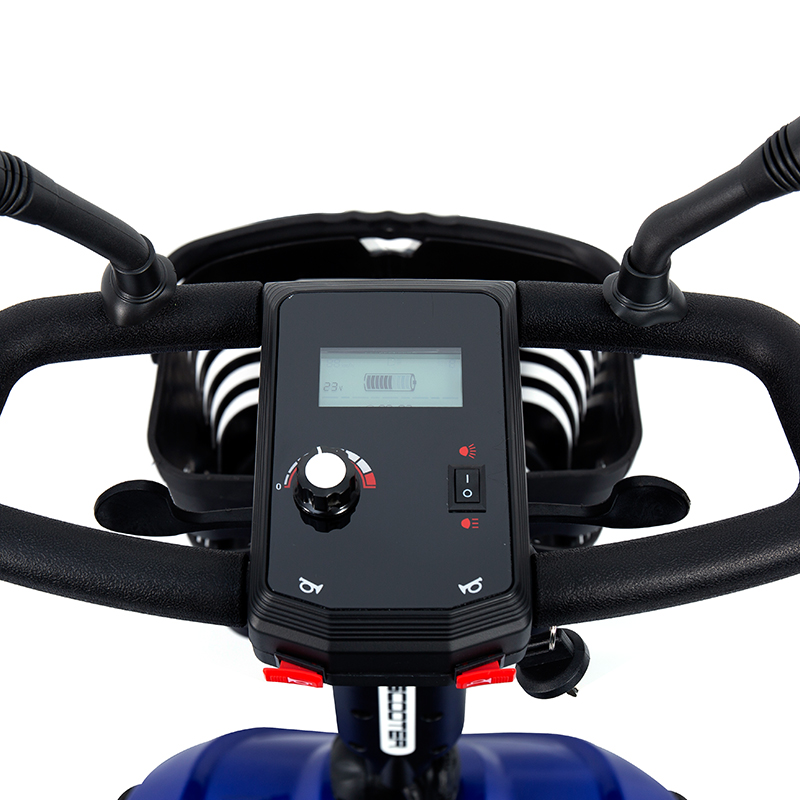 YL-09B Folding Four-Wheel Mobility Scooter with BasketA foldable four-wheel scooter with basket, adjustable seat and solid tires, suited to errands and neighborhood trips where portability and a smaller footprint matter.View Product →
A lightweight folding model with a basket, such as the YL09B, shows how daily convenience and portability can overlap. It suits riders who want a simple errand scooter without a full-size footprint.
Folding and travel scooters
Folding frames and removable batteries make these models easier to load into a car or store in a closet. The trade-off is usually a smaller seat, less suspension, and lower ground clearance. They are a good match for travel, short community trips, and mixed indoor-outdoor use.
All-terrain and heavy-duty scooters
Wider tires, higher ground clearance, and stronger motors help on gravel, grass, and slopes. These models are less suited to tight indoor spaces. Choose one only if rough surfaces or hills are part of your regular route.
Three-wheel and four-wheel layouts
Three-wheel scooters can turn in a tighter radius. Four-wheel models usually feel more stable at speed and on uneven ground. For outdoor use, four wheels are often the safer default; for tight indoor spaces, test the turning circle before deciding.
Read the Specs That Actually Change Daily Use
Specification sheets reward careful reading. The numbers that matter most are not always the ones printed in the largest font.
Weight capacityLeave a margin below the maximum. Rider weight plus a basket or bag adds up.
RangeTreat published range as a ceiling. Hills, cold weather, and frequent starts reduce it.
Ground clearanceLow clearance suits smooth floors; higher clearance helps on curbs and rough paths.
Turning radiusMeasure tight hallways, shop aisles, and doorways before choosing a larger model.
Range is an estimate, not a promise. Choose a model with a buffer for your normal round trip. Ground clearance, turning radius, and tire type matter more than top speed for most buyers. A scooter rated for a 12 percent climb may handle a sloped driveway or parking ramp, but the rider should still test the route and follow the manual. Lights and brake type are also practical safety features, especially for early morning or evening use.
Plan for Portability, Transport, and Travel
Portability is a system, not a single number. The total weight matters, but so do the heaviest piece, the battery weight, the folding action, and whether the scooter rolls when folded.
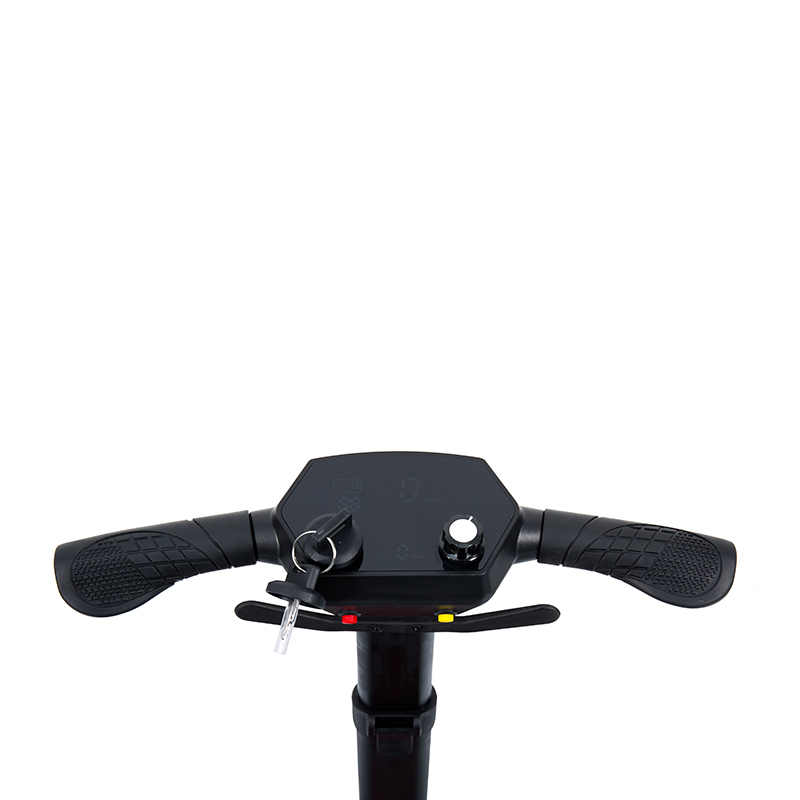 YL985S Lightweight Folding Travel Mobility ScooterAn aluminum-frame travel scooter that folds compactly and weighs 17 kg net, making it worth checking for car-trunk transport and caregiver lifting routines.View Product →
A travel-oriented model such as the YL985S is designed around lightweight folding and transport. Before buying, practice the fold and lift sequence. If a caregiver will handle the scooter, include that person in the decision.
- Will it fit the car boot with the seat and basket removed?
- Can you lift the heaviest part safely?
- Is the battery removable for indoor charging?
- Does the folded shape fit your storage area?
- Are the battery and charger compatible with your travel plans?
For air travel, check the airline and battery rules directly. Battery type, watt-hour rating, and carrier approval can affect whether a scooter can travel. Do not rely on a general online claim for a specific trip.
Match Outdoor Terrain, Hills, and Stability
Outdoor routes expose weaknesses that showroom floors hide. Gravel, wet leaves, curb cuts, and slopes demand traction, clearance, and stable weight distribution.
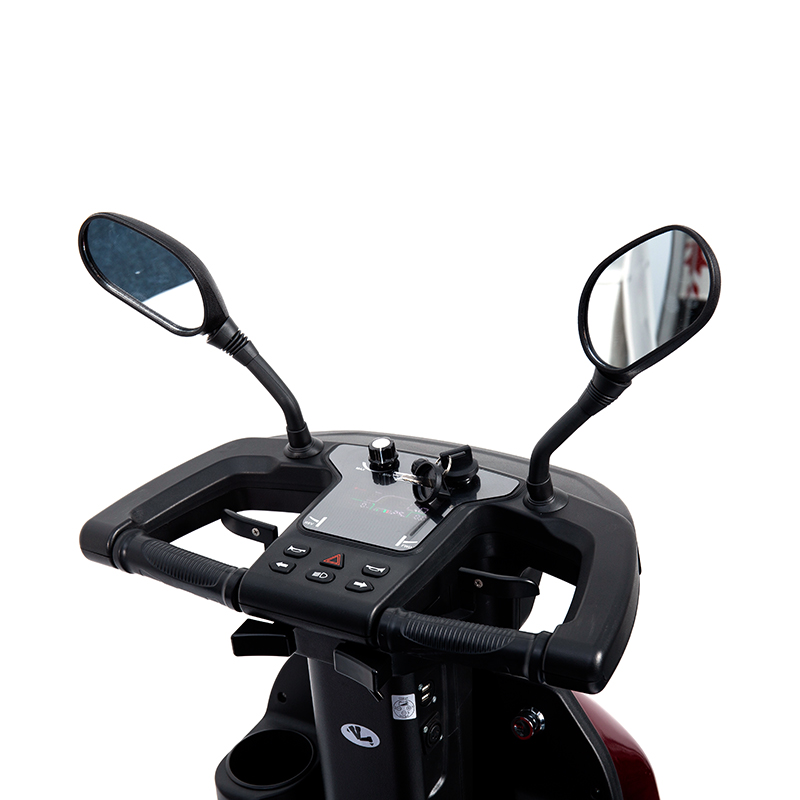 TK-500 Heavy-Duty All-Terrain Four-Wheel ScooterA steel-frame, suspension-equipped scooter with 13-inch off-road tires and high power, intended for rough outdoor routes rather than indoor shopping trips.View Product →
An all-terrain model like the TK500 is built for heavier outdoor use, with a wider stance and more power for rough ground. It is not automatically the best choice for a shopping center. Match the machine to the route: a heavy-duty scooter can be frustrating indoors, while a travel scooter can struggle on loose gravel.
On slopes, keep the load balanced and avoid sharp turns. Follow the manufacturer's slope limit and do not exceed the rated capacity. If your route includes steep ramps, test the scooter on a similar incline with a companion present before riding alone.
Prioritize Comfort, Fit, and Control
A scooter is a seat, a steering system, and a braking system. Comfort affects how long you can ride; control affects how safely you can stop and turn.
- Seat height and depth should let your feet rest flat and your back feel supported.
- Armrests should support the forearms without blocking access to controls.
- The tiller should adjust so you can steer with relaxed shoulders.
- Controls should be readable and reachable without stretching.
- Mirrors, lights, and a clear horn improve confidence in traffic.
Test on a route that resembles your daily life, not only a smooth showroom floor. Wear the shoes you normally wear. Ask about seat padding, armrest width, and tiller angle. If walking support is the main need rather than seated travel, a rollator may be more appropriate than a scooter.
Understand Battery, Safety, and Maintenance
Battery choice affects weight, range, charging time, and replacement cost. Sealed lead-acid batteries are heavier and usually cheaper. Lithium-ion packs are lighter and often easier to remove, but they require correct charging and storage.
Charge according to the manual, avoid fully draining the battery regularly, and store it in a dry place within the recommended temperature range. Keep tires at the correct pressure, test brakes before each trip, and check lights and cables. A simple monthly inspection prevents many roadside problems.
Rules for pavement use, speed, registration, and insurance vary by region. Check local guidance before riding on public roads or pedestrian areas. Confirm the warranty, return policy, spare parts support, and delivery terms. If you plan to use the scooter in a care facility or adapted vehicle, ask whether the model has the required tie-down points and transport approvals.
FAQ: Common Mobility Scooter Selection Questions
Q1: Is a three-wheel scooter less stable than a four-wheel model?
Generally, four-wheel models feel more stable on uneven ground and at higher speeds. Three-wheel models can turn more tightly. The right choice depends on whether your priority is indoor maneuverability or outdoor confidence.
Q2: How much range do I really need?
Estimate your longest usual round trip and add a buffer. Hills, cold weather, and rider weight reduce real-world range. A scooter with extra range is useful only if you can charge and store it conveniently.
Q3: Can I take a mobility scooter on a plane?
Some can travel, but approval depends on the airline, battery type, and watt-hour rating. Confirm directly with the carrier before booking and ask for the battery documentation.
Q4: Should I choose a heavy-duty model for better durability?
Heavy-duty models help on rough terrain and slopes, but they are harder to transport and store. Choose one only if your routes require it. For paved community use, a lighter model may be more practical.
Q5: What should I test before buying?
Test the seat fit, tiller angle, braking, turning circle, fold and lift sequence, and battery removal. If possible, ride a route similar to your daily journey.
Build a Shortlist and Confirm the Details
Start with your route, storage, and transport limits. Then compare scooter types, confirm the weight capacity, range, ground clearance, and battery style, and test the fit. A good selection guide does not point to one universal model; it helps you eliminate models that cannot support your daily life.
Before ordering, ask for the manual, warranty terms, spare parts list, delivery details, and any available user instructions. If you are comparing models for a family member, involve the rider in the final test. The best scooter is the one that is easy to use, easy to charge, and safe on the routes that matter.
PREV:No previous article
NEXT:How to Choose a Mobility Scooter: A Practical Buying Guide for Daily Life
NEXT:How to Choose a Mobility Scooter: A Practical Buying Guide for Daily Life
Interested in cooperation or have questions?
News

-
The information provided on this website is intended for use only in countries and jurisdictions outside of the People's Republic of China.
-
Office Address
Room 315, building5, No.45 Songbei Road, Suzhou area, China Pilot Free Trade Zone
-
Factory Address
No. 2 Shanyan Road, Huzhen Town, Jinyun Country, Lishui, Zhejiang, China
-
Mobile Phone
+86 137 7606 7076
-
Email
taylor.liu@heinsmed.com
Stay Connected
lf you can't find the answer you're looking for, chat with our friendly team.
Mobile
Copyright © Suzhou Heins Medical Equipment Co., Ltd. All Rights Reserved.
Custom Mobility Scooters for Elderly Suppliers
Custom Mobility Scooters for Elderly Suppliers