


 Español
 Deutsch
 عربى
عربى
1. Introduction In modern society, with the increasing trend of population aging and the accelerating pace of life, the importance of means of transpo...
READ MOREHow to Plan Accessible Vacations: The Ultimate Guide to Cruise Scooters and Power Chairs
Navigating the open seas has become one of the most popular vacations for people with mobility issues. Modern cruise ships operate as floating cities, offering unprecedented accessibility features designed to accommodate travelers who rely on personal mobility devices. However, ensuring a seamless maritime vacation requires comprehensive planning, a deep understanding of shipboard infrastructure, and selecting the correct equipment, such as an airline approved mobility scooter or a lightweight folding power chair.
Cruising with a disability does not mean compromising on adventure. From wide corridors to specialized staterooms, the maritime industry has made significant strides in accessibility. Success lies in understanding the technical and logistical realities of bringing portable mobility aids for travel onto a vessel.
Evaluating Cruise Ship Infrastructure for Mobility Devices
Not all cruise ships are engineered equally when it comes to accommodating specialized transit equipment. Newer vessels built within the last decade generally feature superior accessible design compared to older fleets. When planning your vacation, analyzing the physical layout of the ship is the first critical step.
Stateroom Thresholds and Doorway Clearances
Standard cruise cabins typically feature narrow doorways ranging from 22 to 24 inches in width, often accompanied by a raised structural lip or threshold step to prevent water displacement. These standard configurations cannot accommodate a standard travel/portable electric scooter or a travel/portable electric wheelchair.
Accessible staterooms, conversely, offer wider entryways of at least 32 inches, completely flat thresholds, and roll-in wet rooms. Travelers must confirm these dimensions prior to booking, as personal equipment must be stored inside the cabin and never left in the public corridors due to strict maritime safety regulations.
Public Spaces and Deck Accessibility
Modern mega-ships feature spacious elevator banks, ramped access to pool decks, and dedicated seating spaces in theaters and dining rooms for users of travel/portable electric scooter units. However, historic or smaller vessels may utilize steep outdoor ramps or lack elevator access to top-deck observation areas. It is vital to research the specific deck plans to identify potential structural bottlenecks.
Choosing Between a Travel Scooter and a Power Wheelchair
Selecting the optimal device impacts your independence and comfort during a voyage. Both equipment types possess distinct advantages tailored to specific user capabilities and shipboard environments.
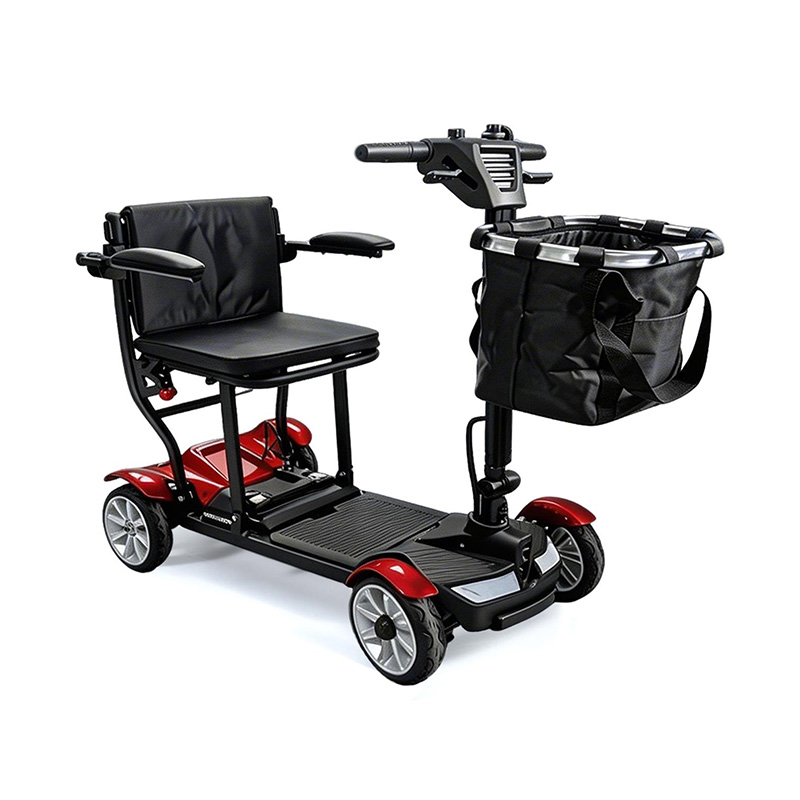
A travel/portable electric scooter offers excellent directional stability, high visual visibility, and simple steering handlebars, making it ideal for navigating long ship corridors and expansive promenade decks. These are highly favored as cruise scooters due to their extended battery ranges and robust performance on outdoor surfaces.
Conversely, a travel/portable electric wheelchair provides an incredibly tight turning radius, allowing users to maneuver effortlessly inside small cabins, standard elevators, and crowded buffet lines. They are operated via joystick controllers, requiring minimal upper-body strength compared to a scooter tiller.
| Feature Metrics | Travel Electric Scooter | Travel Electric Wheelchair |
|---|---|---|
| Turning Radius | Moderate to Wide (Typically 40-50 inches) | Ultra-Tight (Typically 20-30 inches) |
| Steering Mechanism | Delta Tiller / Handlebars (Two Hands Required) | Joystick Controller (Single Finger Control) |
| Cabin Storage compatibility | Requires folding or disassembly | Compact folding footprints |
| Outdoor Terrain Capability | High capability for cobblestones/ports | Optimized for smooth, flat surfaces |
Air Travel Regulations and Boarding Logistics
For most travelers, the journey to the cruise port involves commercial aviation. Transitioning your mobility equipment from an airplane to a cruise ship terminal requires strict adherence to international transit regulations.
Battery Compliance for Air Travel
When flying with an airline approved mobility scooter or power chair, the battery chemistry is the most critical regulatory factor. Lithium-ion batteries must meet strict International Air Transport Association guidelines. Generally, a single lithium-ion battery for a mobility device must not exceed 300 Watt-hours (Wh). If the device requires two batteries, each must not exceed 160 Wh.
Sealed Lead Acid and Gel batteries do not have Watt-hour restrictions but must be clearly labeled as non-spillable. It is imperative to carry the manufacturer data sheet verifying compliance to present to airline gate agents during check-in.
Terminal Boarding and Port Infrastructure
On embarkation day, port terminals can be exceptionally busy. Travelers utilizing mobility scooters for cruise ships are typically granted priority boarding status. Staff members guide users through dedicated, ramped customs lanes directly onto the vessel entrance deck.
Ensure that your device is fully charged prior to arriving at the port terminal, as the embarkation process, security checks, and safety briefings can take several hours before you gain access to your stateroom power outlets.
Navigating Port Days and Shore Excursions Successfully
Disembarking the ship at various destinations presents distinct environmental challenges, particularly when visiting historic ports or remote island locations.
Docked Ports vs. Tender Ports
When a cruise ship docks alongside a concrete pier, disembarking with portable mobility aids for travel is straightforward, utilizing the ship gangway. However, if a port requires tendering (using smaller boats to transport passengers ashore), physical limitations apply.
Many cruise lines prohibit motorized equipment or heavy mobility scooters for cruise ships from being loaded onto small tender watercraft due to volatile sea swells and safety risks. If your itinerary features tender ports, look for cruise lines operating modern, accessible tender boats equipped with roll-on platform mechanisms.
Accessible Vacation Tips for Shore Success
- Pre-Book Accessible Shore Excursions: Standard tour buses lack hydraulic lifts. Always secure specialized accessible tours that feature wheelchair-accessible transport vans early, as availability is severely limited.
- Analyze Local Surface Materials: Research whether destination pathways consist of smooth pavement, loose sand, or historic cobblestones. A lightweight folding power chair or scooter with higher ground clearance performs much better on challenging urban infrastructure.
- Carry Universal Charging Adapters: Foreign ports may utilize different electrical socket configurations. Ensure your device charger can accept dual voltage inputs (110V-240V) to avoid damaging internal electrical components when charging onshore.
Shipboard Safety, Etiquette, and Onboard Maintenance
Operating a motorized device within the confines of a maritime vessel requires situational awareness and preventative care to protect yourself and fellow passengers.
Corridor Navigation and Elevator Courtesy
Cruise ship corridors can be highly congested with housekeeping carts, luggage handling, and pedestrian traffic. Maintain a low speed setting on your travel/portable electric wheelchair or scooter when traversing these zones. When utilizing elevators, allow pedestrians to exit completely before entering, and back into the elevator cab if possible to ensure a forward-facing exit when reaching your destination deck.
Device Charging and Power Management
Marine electrical systems operate on isolated distribution networks. Standard stateroom outlets may have lower wattage thresholds compared to residential wall outlets. Always plug your equipment directly into the built-in desk outlets rather than utilizing multi-plug extension cords, which are often confiscated by ship security as fire hazards. Charge your batteries overnight to ensure full capacity for the subsequent day activities.
Frequently Asked Questions
Q1: Can I rent a mobility scooter directly through the cruise line?
Cruise lines do not typically own rental fleets directly, but they partner with authorized third-party maritime medical equipment providers. These specialized companies can deliver a certified cruise scooter directly to your stateroom prior to embarkation and collect it on disembarkation day.
Q2: Where do I store my travel portable electric scooter when inside my cabin?
All personal mobility equipment must be stored fully inside your designated stateroom. It is strictly illegal under maritime safety laws to leave devices parked in corridors, as they block vital emergency evacuation paths. If you book a standard cabin, you must utilize a compact folding device that fits within the interior floor plan.
Q3: Are shipboard public restrooms equipped to handle large power wheelchairs?
Yes, modern cruise vessels feature clearly marked, fully accessible public restrooms on all major public decks. These facilities feature automated push-button doors, grab bars, and ample interior clearance to accommodate the turning radius of a travel/portable electric wheelchair easily.
Q4: What should I do if my mobility aid experiences a mechanical breakdown at sea?
You should immediately contact the Guest Services desk onboard. While cruise ships do not employ dedicated mobility technicians, their engineering departments can often assist with basic issues like tightening loose structural bolts, securing wiring connections, or helping manually override electronic brake systems in an emergency.
Q5: Do cruise line swimming pools feature accessible entry systems?
Most modern and recently updated cruise ships have at least one primary swimming pool and select whirlpool hot tubs equipped with specialized mechanical chair lifts. Guests requiring assistance should ask pool deck staff members to activate the lift mechanisms when needed.
PREV:Mobility Scooter vs. Power Wheelchair: How to Choose the Right Device for Your Lifestyle
NEXT:How to Safely Transport Your Mobility Scooter or Power Wheelchair in an SUV or Van
NEXT:How to Safely Transport Your Mobility Scooter or Power Wheelchair in an SUV or Van
Interested in cooperation or have questions?
News

-
The information provided on this website is intended for use only in countries and jurisdictions outside of the People's Republic of China.
-
Office Address
Room 315, building5, No.45 Songbei Road, Suzhou area, China Pilot Free Trade Zone
-
Factory Address
No. 2 Shanyan Road, Huzhen Town, Jinyun Country, Lishui, Zhejiang, China
-
Mobile Phone
+86 137 7606 7076
-
Email
taylor.liu@heinsmed.com
Stay Connected
lf you can't find the answer you're looking for, chat with our friendly team.
Mobile
Copyright © Suzhou Heins Medical Equipment Co., Ltd. All Rights Reserved.
Custom Mobility Scooters for Elderly Suppliers
Custom Mobility Scooters for Elderly Suppliers