


 Español
 Deutsch
 عربى
عربى
1. Introduction In modern society, with the increasing trend of population aging and the accelerating pace of life, the importance of means of transpo...
READ MOREMobility Scooter vs. Power Wheelchair: How to Choose the Right Device for Your Lifestyle
Evaluating Electric Mobility Options for Enhanced Independence
Selecting the ideal personal mobility device represents a significant milestone toward reclaiming independence, enhancing community participation, and maintaining an active lifestyle. For individuals experiencing temporary or permanent mobility limitations, navigating the vast marketplace of electric mobility options can feel overwhelming. The choice frequently narrows down to two primary categories: a motorized scooter or an electric wheelchair. While both devices serve the essential purpose of transporting an individual safely from one point to another, they are engineered for fundamentally different physical capabilities, environments, and lifestyles.
Understanding the technical nuances, ergonomic architectures, and functional boundaries of each option ensures that your investment aligns perfectly with your physical requirements. A misinformed choice can lead to discomfort, restricted access to preferred environments, or even physical strain. Conversely, selecting the appropriate technology enhances daily comfort, boosts confidence, and seamless integrates into existing routines. This comprehensive power chair comparison guide systematically evaluates the design philosophy, functional capacities, and practical applications of both device types to facilitate an informed, long-term decision.
Core Principle: The right mobility aid does not just move a person; it seamlessly integrates into their specific anatomical needs, domestic layout, and social aspirations without introducing secondary physical strain.
To make a truly informed choice, one must look beyond aesthetics and initial cost. The evaluation process requires an honest assessment of upper-body strength, core stability, cognitive processing speed, and spatial configurations of the home and local community. By analyzing how these devices perform across various terrains, how they are transported, and how they support postural health, users can confidently select a solution that transforms daily barriers into accessible pathways.
Anatomy and Structural Profiles of Mobility Devices
To understand which device best suits your daily routine, it is essential to first break down their structural blueprints. A mobility scooter is typically designed with a configured three- or four-wheel chassis, a central floorboard for foot placement, and a front steering column known as a tiller. The seating is often reminiscent of a captain's chair, mounted on a central post above the rear motor compartment. This design configuration requires the user to sit in a relatively upright posture, extending both arms forward to manage the handlebars, throttle levers, and console controls.
In stark contrast, a power wheelchair utilizes a specialized frame layout where the user sits directly within the wheelbase. This positioning maximizes stability and minimizes the overall spatial footprint. Instead of a bulky tiller assembly, propulsion and directional steering are managed via a compact, programmable joystick module typically mounted on one of the armrests. This eliminates the need for a front-mounted steering mechanism, keeping the area directly in front of the user entirely clear and unobstructed.
The drive wheel positioning in power chairs further diversifies their structural profiles. Front-wheel drive models pull the chair over obstacles and excel in tight indoor spaces, mid-wheel drive configurations provide the absolute tightest turning radius by rotating entirely on their center axis, and rear-wheel drive designs deliver optimal tracking and high-speed stability across outdoor landscapes. Conversely, scooters rely almost exclusively on front-wheel steering mechanics combined with transaxle rear-wheel drive systems, rendering them inherently less agile in confined residential hallways but highly effective for covering linear distances outside.
The Critical Differences Between Manual and Power Wheelchairs
Before diving deeper into motorized comparisons, it is vital to establish the fundamental differences between manual and power wheelchairs. A manual wheelchair relies entirely on human upper-body strength or the physical assistance of a caregiver for propulsion. The user must repeatedly grip and push the rear wheel handrims, which requires continuous expenditure of energy, healthy shoulder mechanics, and excellent cardiovascular endurance. While manual chairs are highly lightweight and easily foldable, long-term dependence on manual propulsion can contribute to chronic repetitive strain injuries in the rotator cuff muscles and wrist joints.
A motorized or power wheelchair replaces human physical effort with sophisticated electro-mechanical propulsion systems. High-capacity deep-cycle batteries supply energy to independent electric motors attached directly to the drive wheels. The primary functional benefits include:
- Zero Propulsion Effort: Users can travel miles over complex terrains without physical exhaustion, safeguarding their upper-body joints from repetitive motion strain.
- Precision Control Interfaces: Individuals with minimal hand function can operate a power chair via touch-sensitive joysticks, chin controls, or sip-and-puff breath systems.
- Advanced Seating Dynamics: Powered models can integrate automated tilt, recline, and elevating leg rests to manage pressure distribution and physiological health dynamically.
Ultimately, the transition from manual to power systems represents a shift from physical energy conservation to technological empowerment. For individuals with progressive neurological conditions, severe cardiopulmonary limitations, or significant bilateral upper-extremity weakness, a motorized system becomes a mandatory medical necessity rather than a simple lifestyle convenience.
Visualizing Modern Senior Mobility Solutions
Modern senior mobility solutions have evolved dramatically beyond basic utility, integrating ergonomic support systems, advanced electronics, and sophisticated industrial designs. The following image showcases the structural refinement typified by contemporary personal mobility engineering, balancing daily operational durability with high-level user comfort.
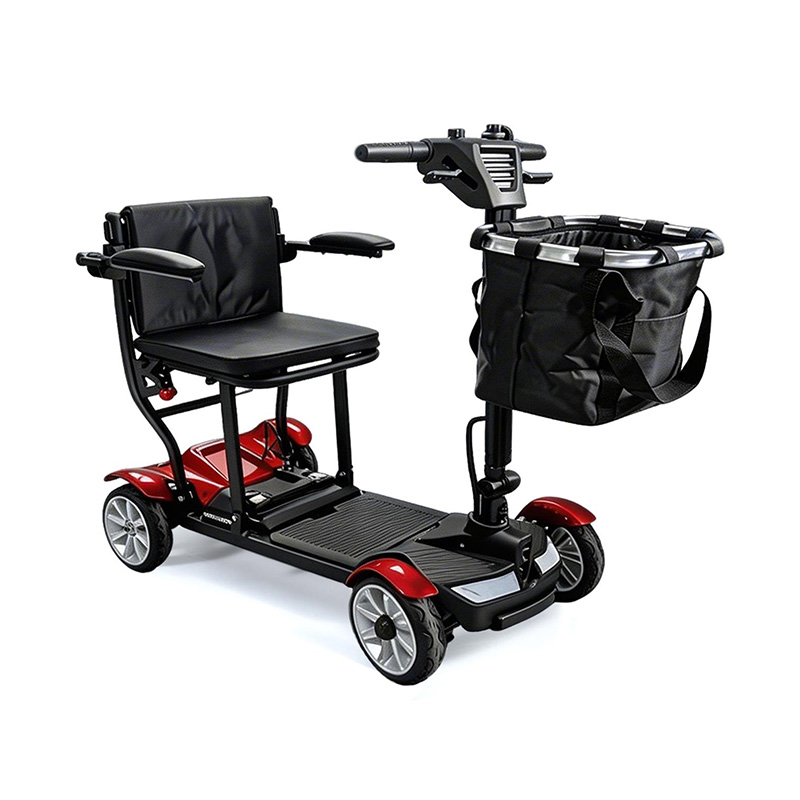
As observed in modern designs, the focus remains heavily on providing a stable platform that protects the spine while ensuring that the control scheme is easily accessible. Whether choosing a scooter design for expansive outdoor travel or a power wheelchair for intricate indoor layouts, observing these structural design advancements helps buyers recognize high-quality manufacturing standards.
Maneuverability and Spatial Dynamics: Turning Radius Compared
The environment in which a device is intended to operate dictates the required level of maneuverability. Turning radius represents the exact amount of clear floor space a device needs to perform a complete 360-degree turn without striking surrounding walls or furniture. This single technical specification often serves as the deciding factor when choosing a mobility device for residential use.
Power wheelchairs excel dramatically in tight spatial dynamics. Because a center-wheel drive power chair can rotate around its own geometric center, its turning radius can be as compact as 20 to 26 inches. This enables the user to navigate narrow doorways, spin around within a standard residential bathroom, and easily manipulate tight kitchen configurations. The lack of a front steering column means the user can pull up completely flush to desks, dining tables, and counters, maximizing functional accessibility.
20 - 26"
Power Chair Turning Radius
Ideal for navigating tight domestic corridors, standard doorways, and compact indoor spaces effortlessly.
40 - 55"
Mobility Scooter Turning Radius
Requires expansive pathways and wide arcs; best suited for open commercial spaces and outdoor routes.
Mobility scooters, conversely, possess a significantly larger turning radius, typically ranging from 40 to over 55 inches depending on whether the unit is a three-wheel or four-wheel design. The extended front wheel assembly and steering tiller necessitate a wide arc to execute a turn. Consequently, operating a scooter inside a conventional residential floor plan often leads to frequent maneuvering complications, wall damage, and general frustration. They are inherently optimized for wide open spaces, such as suburban sidewalks, shopping malls, public parks, and outdoor pathways.
Physical Capabilities and Core Ergonomic Requirements
When choosing a mobility device, a thorough self-assessment of the user's physical capacities is essential. The two types of devices demand vastly different levels of physical strength, balance, and cognitive-motor coordination. Attempting to operate a device without matching its physiological demands can result in rapid fatigue or unsafe operation.
Operating a motorized scooter requires a baseline level of upper-body functionality and postural control. The user must possess sufficient core trunk strength to remain seated upright without external lateral supports while navigating bumps or inclines. Furthermore, both hands must have adequate grip strength and dexterity to maintain a continuous hold on the handlebars, operate the thumb or finger throttles, and rotate the heavy tiller assembly to steer the front wheels. Consistent shoulder extension is mandatory, which may prove exhausting for individuals with chronic arthritis or progressive muscle weakness.
| Physical Attribute | Mobility Scooter Requirements | Power Wheelchair Requirements |
|---|---|---|
| Trunk Stability | Moderate to High; must maintain balance without lateral postural supports. | Low to High; adaptable with custom molds, chest straps, and lateral bolsters. |
| Upper Limb Strength | Requires functional control of both arms and hands to steer the mechanical tiller. | Minimal; manageable via a single finger, chin, or sip-and-puff mechanism. |
| Endurance | Requires sustained muscular effort in arms and shoulders over extended travel times. | Very low physical effort required, conserving the user's metabolic energy. |
| Postural Accommodation | Limited to basic seat rotation and fixed recline angles. | Highly advanced; supports electronic tilting, reclining, and standing configurations. |
A power wheelchair serves as a highly adaptable solution that can accommodate severe, complex, or fluctuating physical limitations. Because propulsion requires only a light touch on a sensitive joystick, users with minimal physical strength can operate the device all day long. If an individual completely lacks hand and arm function, specialized input alternatives can be integrated into the headrest or armrest assembly. Additionally, power chairs can be outfitted with highly customized clinical seating systems, contour cushions, head supports, and positional belts, making them suitable for individuals who require comprehensive external support to maintain full body alignment.
Outdoor Performance and Terrain Versatility
Evaluating your local geography and daily outdoor goals is another key step in selecting the correct device. Sidewalk conditions, curb heights, gravel pathways, grassy parks, and steep neighborhood inclines all impose specific demands on a mobility platform's powertrain and wheel architecture.
For long-distance outdoor travel over uniform surfaces, a heavy-duty four-wheel scooter is exceptionally proficient. These units generally feature larger pneumatic tires, high ground clearance, and robust transaxle drive motors that can maintain consistent speeds over asphalt, compacted gravel, and short-cut grass. They are designed to mirror the operational experience of a recreational vehicle, providing excellent tracking over long straightaways and offering larger battery capacities that extend travel ranges up to 20 or 30 miles on a single charge cycle. This makes them a great fit for outdoor community festivals, theme parks, and extended neighborhood jaunts.
While power chairs can also navigate challenging outdoor environments, their performance depends heavily on their drive-wheel configuration. Mid-wheel drive power chairs provide superb indoor agility but can occasionally experience traction loss on damp grass or highly uneven dirt paths if the small front and rear caster wheels lift the central drive tires off the ground. For regular rugged outdoor use, a dedicated rear-wheel or front-wheel drive power chair is typically required. These configurations feature large knobby tires and heavy-duty articulation suspensions to absorb shocks, though they generally operate at slightly lower top speeds compared to high-velocity outdoor scooters.
Transportation, Portability, and Vehicle Compatibility
A mobility device is only useful if it can travel with you to your destination. The weight, dimensions, and breakdown capacity of the chosen unit dictate the type of vehicle required for transport and whether a caregiver will be needed to assist with loading and unloading tasks.
Travel-specific mobility scooters are intentionally engineered for quick disassembly. These lightweight configurations allow the user or an assistant to separate the unit into four or five individual components—typically the front frame, rear motor assembly, seat, battery pack, and front basket—without utilizing specialized tools. The heaviest single component often weighs between 30 and 45 pounds, making it manageable to lift into the trunk of a standard sedan or a compact SUV. However, repeatedly assembling and disassembling a scooter requires physical stamina, hand strength, and a willing assistant.
Transportation Note: While folding power chairs are growing in popularity for air and vehicle travel, full-sized clinical power wheelchairs are complex electro-mechanical structures that cannot be broken down, requiring a dedicated wheelchair-accessible vehicle equipped with a heavy-duty ramp or hitch-mounted platform lift.
Standard power wheelchairs present distinct transport challenges due to their heavy, solid-frame construction and integrated battery systems. A typical full-sized power chair can easily weigh anywhere from 150 to over 300 pounds. Consequently, they cannot be lifted manually into a conventional vehicle trunk. Transporting a full-sized power chair necessitates a dedicated handicap-accessible van equipped with an electronic ramp or an expensive, externally mounted motorized platform lift attached to a heavy-duty vehicle hitch. While lightweight, folding power chairs constructed from aerospace aluminum offer an alternative for standard trunk transport, they often feature reduced seat cushioning and less advanced electronics to achieve their low-weight profile.
Seating Ergonomics and Long-Term Comfort Dynamics
For individuals who expect to spend more than two consecutive hours in their mobility device daily, seating ergonomics shift from a basic comfort consideration to a fundamental health requirement. Prolonged sitting on poorly designed surfaces can lead to skin breakdown, poor circulation, chronic lower back pain, and postural deformities.
A Comfortable Electric Scooter is excellent for transient seating, meaning the user utilizes the device to travel from their home to a grocery store, but transfers out of the scooter into a standard chair upon arrival. The seating options on most standard scooters consist of padded, vinyl-wrapped captain's chairs with fixed contours. While comfortable for brief periods, these seats offer minimal pressure redistribution and limited adjustment options. Because the user must continuously lean slightly forward to hold the steering tiller, pressure is concentrated on the ischial tuberosities (the sit bones), which can become uncomfortable over extended periods.
A Comfortable Electric Wheelchair is engineered as a comprehensive, long-term seating solution where the user may safely remain for 8 to 12 hours a day. These systems are highly adaptable and can be configured with therapeutic gel cushions, air-bladder inserts, and custom-molded backrests that precisely follow the user's spinal curvature. Furthermore, complex power chairs offer powered clinical features that can be operated dynamically via the joystick interface:
- Power Tilt-in-Space: Shifts the user's weight from the pelvic region to the back without changing the hip-to-knee angle, providing immediate pressure relief and promoting healthy circulation.
- Power Recline: Opens up the hip angle to stretch the hip flexors and facilitate comfortable resting or caregiver personal care tasks directly within the chair.
- Power Seat Elevation: Safely raises the entire seating platform up to 12 inches vertically, allowing the user to engage in eye-level social interactions and safely reach upper cabinetry.
Lifestyle Matching Matrix: Which Device Fits Your Routine?
To synthesize these engineering and medical parameters into a clear decision-making framework, let us analyze typical user profiles and daily operational environments. Matching your unique lifestyle to the correct device ensures long-term satisfaction and utility.
The ideal scooter candidate is an individual who retains independent standing and walking capabilities but suffers from limited stamina, systemic fatigue, or mild shortness of breath when traversing long distances. This user requires a device primarily to maintain community access, such as attending outdoor markets, traveling down neighborhood sidewalks, or visiting spacious shopping centers. They possess the upper-body strength to steer a tiller and can easily transfer out of the device independently when necessary. Their home layout features wide, open spaces or they store the scooter in a garage or entryway, using it exclusively for outdoor excursions.
The ideal power wheelchair candidate is an individual dealing with a permanent, progressive, or severe mobility limitation that affects both their lower and upper extremities. This user may find standing or transferring independently difficult or impossible, requiring a device that can support them comfortably throughout the entire day. They require a highly agile device that can navigate the tight configurations of residential kitchens, bathrooms, and bedrooms without sacrificing independence. Their physical condition requires advanced ergonomic positioning to prevent skin breakdown, manage spasms, or accommodate joint contractures.
Financial Considerations and Insurance Procurement
Acquiring a personal mobility device involves careful financial consideration. Total costs vary widely based on the complexity of the chosen technology, ranging from entry-level portable units to highly sophisticated, custom-engineered medical systems. Understanding insurance funding criteria can substantially reduce out-of-pocket expenses.
Mobility scooters generally feature a lower initial purchase cost compared to power chairs, making them more accessible for direct consumer out-of-pocket purchases. However, because health insurance providers categorize mobility aids strictly based on medical necessity within the home, securing coverage for a scooter can be challenging. If the user can walk effectively across their living room but requires a device primarily for outdoor neighborhood errands, insurance agencies will frequently deny coverage, viewing the device as a lifestyle convenience rather than a medical necessity.
Complex power wheelchairs involve higher manufacturing costs due to their advanced programmable electronics, specialized drive motors, and therapeutic seating designs. Fortunately, because these systems directly address severe functional limitations within the home, they are more frequently approved by medical insurance policies and government funding programs. To qualify, a user must typically undergo a comprehensive clinical assessment conducted by an occupational or physical therapist. This evaluation must prove that a manual wheelchair cannot resolve the limitation and that a power wheelchair is essential for performing basic daily activities like eating, grooming, and transferring safely within the home.
Frequently Asked Questions
Q1: Can a mobility scooter be safely operated inside a small residential home?
A1: Generally, standard three- and four-wheel mobility scooters are not recommended for small residential homes due to their extensive turning radius. Navigating narrow corridors, turning in bathrooms, and moving between tight doorframes often requires a multi-point turn, which can cause wall damage and driver frustration. For dedicated indoor use, a compact power wheelchair is a far more functional solution.
Q2: How often do the batteries require charging on an electric mobility device?
A2: Charging frequency depends heavily on daily mileage and terrain conditions. If the device is used daily for community travel, it should be charged every evening to maintain battery longevity. For occasional use, recharging the battery pack once or twice a week is typically sufficient. Avoid allowing the battery meter to deplete entirely, as this can degrade total storage capacity over time.
Q3: Are power wheelchairs and motorized scooters permitted on commercial airline flights?
A3: Yes, both device types are legally protected mobility options permitted on commercial flights under federal accessibility regulations. However, you must inform the airline at least 48 hours before departure regarding the device's total weight, physical footprint, and the specific battery type utilized (such as sealed lead-acid, gel cell, or lithium-ion) to ensure compliant safety handling during transit.
Q4: What is the main structural difference between a 3-wheel and a 4-wheel scooter model?
A4: A three-wheel configuration features a single front wheel assembly, providing a slightly sharper turning radius and increased legroom, making it well-suited for level indoor surfaces and smooth retail spaces. A four-wheel configuration offers superior lateral stability and more balanced weight distribution, preventing tipping when crossing uneven outdoor terrains, gravel surfaces, or low curbs.
Q5: Can I modify or upgrade the seating system on a mobility scooter later on?
A5: Mobility scooters have limited seating modularity. While you can add basic aftermarket cushions or external lumbar supports, the underlying post-mounted captain's seat frame cannot accommodate advanced clinical pressure-relief systems, powered tilting mechanisms, or custom-molded contour systems. If your physical condition requires progressive postural support, starting with a power wheelchair platform is advisable.
PREV:What Are Steering Wheel Spinner Knobs: Safe Adaptive Driving Solutions for Mobility Device Users
NEXT:How to Plan Accessible Vacations: The Ultimate Guide to Cruise Scooters and Power Chairs
NEXT:How to Plan Accessible Vacations: The Ultimate Guide to Cruise Scooters and Power Chairs
Interested in cooperation or have questions?
News

-
The information provided on this website is intended for use only in countries and jurisdictions outside of the People's Republic of China.
-
Office Address
Room 315, building5, No.45 Songbei Road, Suzhou area, China Pilot Free Trade Zone
-
Factory Address
No. 2 Shanyan Road, Huzhen Town, Jinyun Country, Lishui, Zhejiang, China
-
Mobile Phone
+86 137 7606 7076
-
Email
taylor.liu@heinsmed.com
Stay Connected
lf you can't find the answer you're looking for, chat with our friendly team.
Mobile
Copyright © Suzhou Heins Medical Equipment Co., Ltd. All Rights Reserved.
Custom Mobility Scooters for Elderly Suppliers
Custom Mobility Scooters for Elderly Suppliers