


 Español
 Deutsch
 عربى
عربى
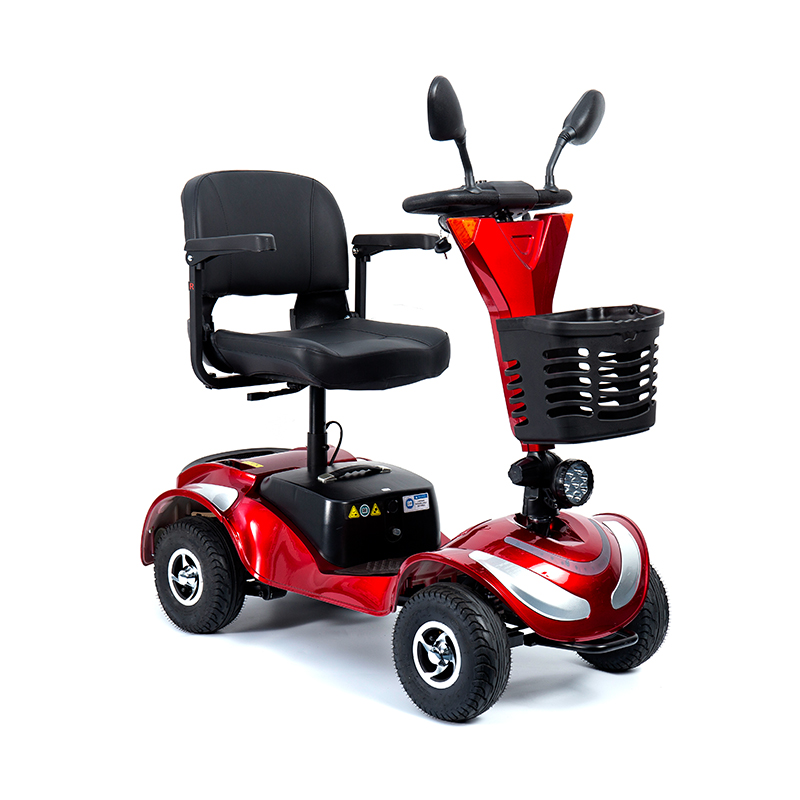
1. Introduction In modern society, with the increasing trend of population aging and the accelerating pace of life, the importance of means of transpo...
READ MOREHow All-Terrain Mobility Scooters Solve the Weight, Traction, and Stability Limits of Standard Models
The Growing Demand for Heavy-Duty Outdoor Mobility Solutions
Standard mobility scooters were originally engineered for flat, predictable surfaces such as indoor flooring, sidewalks, and paved paths. Once a rider moves onto gravel driveways, grass lawns, garden trails, or uneven ground, the limitations of a lightweight frame, narrow tires, and a modest weight rating become obvious almost immediately. This gap in performance is exactly why the category widely referred to as all terrain mobility scooters has expanded so quickly over the past several years.
The demand is not driven by novelty. It comes from two overlapping needs. First, a meaningful percentage of scooter users require a higher weight capacity than a standard 250 to 300 pound rating can safely support. Second, many riders live in rural areas, on properties with sloped or unpaved driveways, or simply want the freedom to travel across parks, campsites, and uneven yards without the scooter bogging down or tipping.
A high weight capacity mobility scooter built with reinforced steel tubing, wider wheelbases, and stronger drivetrains addresses the first concern. Rugged, knobby tires paired with independent suspension address the second. Together, these engineering choices define what separates an everyday indoor scooter from a genuine outdoor mobility scooter with suspension capable of handling rough terrain mobility scenarios day after day.
Engineering Differences That Define All-Terrain Mobility Scooters
The difference between a standard scooter and a rugged outdoor model is rarely a single feature. It is a combination of structural, mechanical, and electrical choices that work together.
Frame and Chassis Reinforcement
A 4x4 mobility scooter frame typically uses thicker gauge steel or reinforced aluminum alloy tubing compared to a standard model. The chassis is also lengthened and widened to lower the center of gravity, which reduces the risk of tipping on slopes or uneven ground. Reinforced cross-bracing under the seat and footplate distributes rider weight more evenly across the frame instead of concentrating stress at a few connection points.
Wheel and Tire Design
Pneumatic, deep-tread tires replace the narrow solid tires found on indoor scooters. Wider contact patches improve traction on grass, sand, and gravel, while increased tire diameter helps the scooter roll over small rocks, roots, and curbs without stalling.
Motor and Torque Output
Climbing inclines and pushing through soft ground requires more torque than cruising on a flat sidewalk. Dual motor configurations, commonly found in an 4x4 mobility scooter, distribute power to both rear wheels independently, which improves stability when one wheel loses traction on loose or wet surfaces.
The chart below compares typical maximum weight capacity across four common scooter classes, illustrating why buyers searching for a heavy duty mobility scooters 500 lbs option need to look specifically at reinforced, purpose-built frames rather than standard indoor models.
Weight Capacity Standards: What 500 lbs and Beyond Actually Means
Weight capacity is not just a number on a spec sheet. It determines the gauge of steel used in the frame, the size of the motor, the strength of the axle, and even the type of seating hardware installed. A bariatric mobility scooter rated for 500 pounds or more is engineered from the ground up, not simply reinforced after the fact.
| Class | Typical Weight Capacity | Frame Material | Recommended Use |
|---|---|---|---|
| Standard Indoor | 250 to 300 lbs | Lightweight aluminum | Flat indoor and paved surfaces |
| Heavy-Duty | 350 to 400 lbs | Reinforced steel | Mixed pavement and light outdoor use |
| Bariatric | 450 to 500 lbs | Heavy-gauge steel | Higher weight riders, wider seating |
| Extreme All-Terrain | 500 to 550 lbs | Reinforced steel with cross-bracing | Rugged outdoor and uneven ground |
Riders searching for a heavy duty mobility scooters 500 lbs option should also check seat width, footplate size, and armrest spacing, since a frame rated for higher weight is only useful if the seating platform is proportioned to match. A mismatch between capacity rating and seat dimensions is one of the most common comfort complaints reported by heavier riders.
Suspension, Ground Clearance, and Ride Stability on Rough Terrain
Independent Suspension Systems
An outdoor mobility scooter with suspension typically uses a combination of front fork dampers and rear shock absorbers rather than a rigid frame. Independent suspension allows each wheel to respond to bumps separately, keeping the seat and footplate more level even when one side of the scooter rolls over a rock or dip while the other stays flat.
Ground Clearance Requirements
Ground clearance determines whether a scooter can pass over curbs, roots, and uneven turf without the undercarriage striking the ground. The column chart below shows how ground clearance typically increases as scooters move from standard indoor models toward extreme offroad mobility scooter configurations.
Higher ground clearance combined with dual suspension is what allows a rough terrain mobility scooter to maintain a level ride on gravel paths, tree-lined trails, and sloped yards where a standard model would either stall or transfer every bump directly into the seat.
Battery Range and Power Considerations Across Terrain Types
Terrain resistance has a direct effect on battery consumption. Soft sand, thick grass, and inclines all require more sustained torque than smooth pavement, which reduces the total distance a scooter can travel on a single charge.
A larger battery pack paired with an efficient dual-motor system helps close this gap, but riders who regularly cross sand, mud, or steep grades should plan routes around the lower end of the manufacturer's stated range rather than the pavement figure listed on the box.
All-Terrain vs Standard Scooters: A Side-by-Side Performance Comparison
The radar chart below places a standard indoor scooter against a purpose-built all-terrain model across six practical categories, each scored on a scale from one to five.
The comparison shows that the largest performance gaps appear in ground clearance, suspension, and traction, three categories that directly govern how confidently a rider can cross gravel paths, lawns, or lightly sloped trails without assistance.
How to Choose the Right 4x4 or Offroad Mobility Scooter
Selecting an off-road mobility scooter is easier when the decision is broken into a clear sequence rather than compared feature by feature. The flowchart below outlines a practical selection process.
Following this order prevents a common mistake: choosing a scooter based on styling or price before confirming that the frame, suspension, and battery are actually rated for the rider's weight and the terrain they intend to cross regularly.
Maintenance Practices That Extend the Life of a Heavy-Duty Scooter
Outdoor use exposes a scooter to more debris, moisture, and mechanical stress than indoor operation, which makes routine maintenance more important, not less.
- Check tire pressure weekly, since pneumatic tires used on rugged terrain lose pressure faster than solid tires.
- Clean the undercarriage after riding through mud, sand, or wet grass to prevent debris buildup around the motor housing.
- Inspect suspension bushings and shock mounts every few months for wear caused by repeated impact on uneven ground.
- Store the battery at a moderate charge level and moderate temperature when the scooter is not in regular use.
- Tighten frame bolts and axle hardware periodically, since vibration on rough terrain gradually loosens fasteners.
A scooter built with a reinforced frame and strong suspension can still wear down prematurely if basic upkeep is ignored, so a simple maintenance routine is just as important as the initial specification sheet.
Frequently Asked Questions About All-Terrain and Bariatric Mobility Scooters
Q1: What weight capacity should I look for in a heavy duty mobility scooter?
Riders close to or above 300 pounds should generally look at models rated for at least 400 to 500 pounds, since manufacturers typically recommend staying well under the maximum listed capacity for long-term reliability.
Q2: Can an all-terrain scooter handle steep inclines?
Most rugged models with dual motors can manage moderate inclines, though steep or loose-surface slopes reduce both speed and battery range, so checking the manufacturer's incline rating before regular use is recommended.
Q3: Is suspension necessary for occasional outdoor use?
Suspension becomes more valuable as terrain gets rougher. Occasional use on smooth gravel may not require it, but frequent travel over grass, dirt, or uneven paths benefits significantly from front and rear suspension.
Q4: How does tire type affect performance on grass or sand?
Wider, deep-tread pneumatic tires distribute weight over a larger surface area, reducing the chance of sinking into soft grass or sand compared to narrow solid tires designed for pavement.
Q5: How often should a bariatric scooter be serviced?
A basic inspection every one to three months is generally sufficient for regular outdoor use, with more frequent checks recommended for riders who cross rough terrain daily or carry weight near the upper capacity limit.
PREV:Why Heavy-Duty Outdoor Mobility Scooters Perform Better on Rough Terrain
NEXT:How to Choose Mobility Scooter Accessories That Actually Improve Comfort, Safety, and Storage
NEXT:How to Choose Mobility Scooter Accessories That Actually Improve Comfort, Safety, and Storage
Interested in cooperation or have questions?
News

-
The information provided on this website is intended for use only in countries and jurisdictions outside of the People's Republic of China.
-
Office Address
Room 315, building5, No.45 Songbei Road, Suzhou area, China Pilot Free Trade Zone
-
Factory Address
No. 2 Shanyan Road, Huzhen Town, Jinyun Country, Lishui, Zhejiang, China
-
Mobile Phone
+86 137 7606 7076
-
Email
taylor.liu@heinsmed.com
Stay Connected
lf you can't find the answer you're looking for, chat with our friendly team.
Mobile
Copyright © Suzhou Heins Medical Equipment Co., Ltd. All Rights Reserved.
Custom Mobility Scooters for Elderly Suppliers
Custom Mobility Scooters for Elderly Suppliers