


 Español
 Deutsch
 عربى
عربى
1. Introduction In modern society, with the increasing trend of population aging and the accelerating pace of life, the importance of means of transpo...
READ MOREHow to Choose Mobility Scooter Accessories That Actually Improve Comfort, Safety, and Storage
Why Aftermarket Add-Ons Matter More Than Most Riders Expect
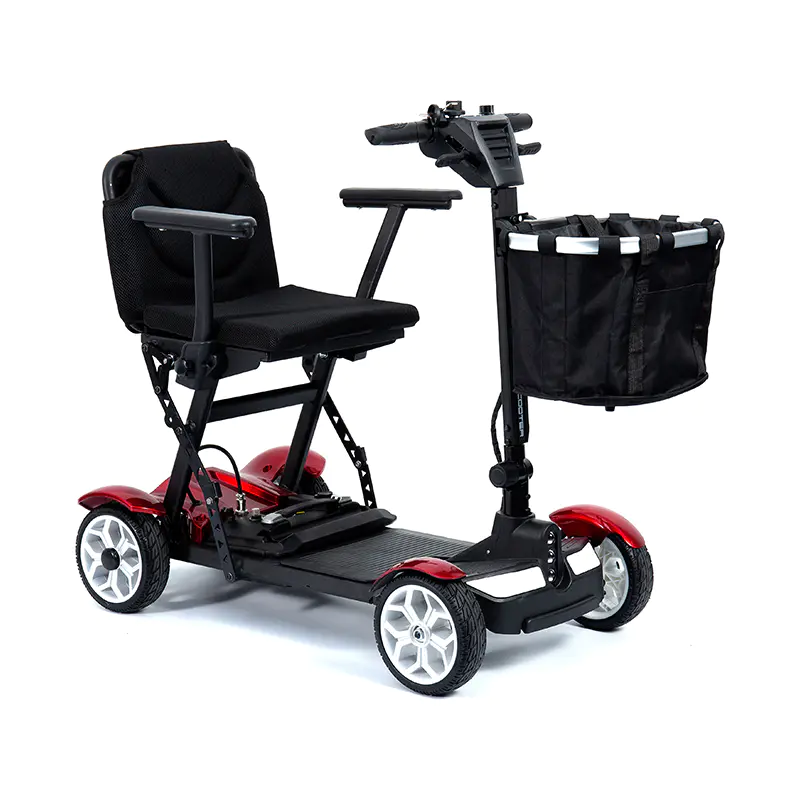
A mobility scooter is rarely used exactly as it leaves the factory. Riders quickly discover that daily conditions, weather, grocery runs, and uneven curbs, demand a level of adaptability that stock equipment does not fully provide. Accessories close that gap. They are not cosmetic extras; they are functional upgrades that determine whether a scooter can be used confidently in rain, whether groceries make it home intact, and whether a rider can access a porch step without assistance.
This guide breaks down the categories that matter most: protective covers, storage baskets, convenience add-ons like cup holders and phone mounts, and access ramps. Each section includes practical comparisons so you can weigh trade-offs rather than guess.
Weatherproofing: Covers and Canopies
Electrical components, seat cushions, and control panels degrade quickly when exposed to repeated moisture. mobility scooter covers waterproof options are designed to shield the entire unit during storage, while canopies protect the rider directly while the scooter is in motion.
Storage Covers vs Riding Canopies
A storage cover is a passive barrier used when the scooter is parked outdoors or in a garage with variable humidity. A canopy, by contrast, is an active accessory mounted to the frame that shields the rider from sun and light rain while traveling. Choosing between them, or using both, depends on how much time the scooter spends stationary versus in motion during poor weather.
Riders consistently rank waterproofing above every other feature when selecting covers, which is logical given that moisture damage is the leading cause of premature battery and motor failure in outdoor storage settings. UV resistance ranks second, since prolonged sun exposure breaks down upholstery and plastic housings over a matter of months.
Material Considerations
- Heavy-duty polyester with a polyurethane coating resists both rain and abrasion.
- Breathable fabric panels reduce condensation buildup underneath the cover.
- Elastic hems keep the cover secured during windy conditions.
- Reflective piping improves visibility when a canopy is used during dusk rides.
Storage Solutions: Baskets and Rear Bags
Carrying capacity is one of the most requested upgrades among scooter owners, since most base models include only minimal onboard storage. A well-fitted mobility scooter basket mounted at the front or a rear storage bag attached behind the seat can dramatically change what a rider is able to accomplish independently, from small grocery trips to carrying a bag for medical appointments.
Front Basket vs Rear Bag: Practical Differences
| Feature | Front Basket | Rear Storage Bag |
|---|---|---|
| Typical capacity | Moderate | Higher |
| Visibility while riding | Partial obstruction possible | No obstruction |
| Access while seated | Easy | Requires turning |
| Best use case | Small errands, personal items | Larger loads, longer trips |
Neither option is universally superior. Riders who frequently need quick access to items such as a phone, wallet, or water bottle tend to favor the front basket. Those who transport larger loads, such as folded rain gear or shopping bags, generally prefer the added rear capacity.
Weight Distribution Matters
Overloading a front basket can shift the center of gravity forward, which affects steering precision on inclines. Manufacturers typically recommend keeping front loads under a moderate weight threshold and distributing heavier items toward rear storage whenever possible.
Convenience Add-Ons: Cup Holders and Phone Mounts
Small accessories often produce outsized improvements in daily usability. A mobility scooter cup holder keeps beverages secure and within reach, while a phone mount supports navigation apps or hands-free calls during longer outings.
The radar comparison illustrates a useful pattern: larger accessories such as canopies score well on weather protection and daily utility but require more installation effort, while small add-ons like cup holders score highest on portability and ease of installation but contribute less to overall functionality. Baskets sit in the middle, offering a balance that explains their popularity as a first purchase.
Phone Mount Placement
Mounts should be positioned within direct line of sight without blocking the primary control panel. Handlebar-clamp mounts with adjustable arms tend to accommodate a wider range of device sizes than fixed-bracket designs.
Access and Transport: Choosing the Right Ramps
mobility scooter ramps solve one of the most common independence barriers: getting the scooter over a curb, into a vehicle, or up a short flight of steps. Ramp selection depends on incline angle, weight capacity, and portability requirements.
Adoption Trend of Portable Access Ramps
Ramp Types at a Glance
- Single-fold ramps for quick curb or single-step access.
- Telescoping channel ramps for loading into vans or trucks.
- Multi-fold suitcase ramps that prioritize compact storage.
- Threshold ramps designed for small indoor level changes.
Weight capacity is the single most important specification. A ramp rated below the combined weight of the scooter and rider creates a genuine safety hazard, particularly on inclines above a moderate angle. Non-slip surface texture and raised side rails further reduce the risk of lateral drift during loading.
Installation Time and Compatibility Planning
Before purchasing any accessory, it helps to understand the relative time investment involved, since some add-ons are designed for tool-free installation while others require more deliberate fitting.
Canopies require the longest setup because they involve frame-mounted brackets and support poles, while cup holders and covers can typically be attached or removed in under five minutes. This timing matters for riders who plan to swap accessories seasonally rather than leaving everything installed year-round.
Checking Compatibility Before You Buy
| Check | Why It Matters |
|---|---|
| Frame diameter | Determines whether clamp-style mounts will fit securely |
| Available power outlets | Relevant for powered mounts or lighting accessories |
| Seat height and armrest style | Affects basket and bag clearance |
| Turning radius | Wide front baskets can interact with steering columns |
A Practical Process for Selecting Accessories
Rather than purchasing accessories impulsively, a short evaluation process helps avoid returns and mismatched expectations.
This sequence works because each stage filters out options that fail on a specific criterion before money changes hands. Skipping the compatibility check is the single most common reason riders end up with an accessory that does not fit their frame, particularly when it comes to canopies and baskets with fixed clamp dimensions.
Maintenance Habits That Extend Accessory Lifespan
Accessories are exposed to the same environmental stress as the scooter itself, so a modest maintenance routine keeps them functional for longer.
Wiping down waterproof covers after wet use and allowing them to dry fully before folding prevents mildew buildup, which is one of the most common reasons covers are discarded within their first year.
- Inspect basket mounting brackets monthly for loosening caused by vibration.
- Rinse ramp surfaces to remove grit that reduces traction over time.
- Retract and store canopy poles when not in use to avoid wind stress on hinges.
- Check cup holder and phone mount clamps for cracking in cold weather.
Frequently Asked Questions
Q1: Can I install a canopy and a rear storage bag on the same scooter?
In most cases yes, provided the frame has separate mounting points for each accessory and the combined added weight stays within the manufacturer's stated capacity.
Q2: How do I know if a cover is truly waterproof rather than water-resistant?
Waterproof covers typically list a hydrostatic pressure rating and use sealed or taped seams, while water-resistant materials only repel light moisture and can saturate during sustained rain.
Q3: What weight capacity should a portable ramp have?
The ramp rating should exceed the combined weight of the scooter and rider by a reasonable margin, since manufacturer ratings typically represent maximum rather than recommended loads.
Q4: Do front baskets interfere with the turning radius?
Oversized baskets can occasionally brush against the steering column at full lock, so checking clearance during a test turn before permanent installation is worthwhile.
Q5: How often should waterproof covers be replaced?
With regular use and proper drying between wet exposures, a well-made cover typically lasts several years before seam sealing or fabric coating begins to degrade.
PREV:How All-Terrain Mobility Scooters Solve the Weight, Traction, and Stability Limits of Standard Models
NEXT:How to Maximize Mobility Scooter Battery Lifetime and Driving Range: Essential Care Guide
NEXT:How to Maximize Mobility Scooter Battery Lifetime and Driving Range: Essential Care Guide
Interested in cooperation or have questions?
News

-
The information provided on this website is intended for use only in countries and jurisdictions outside of the People's Republic of China.
-
Office Address
Room 315, building5, No.45 Songbei Road, Suzhou area, China Pilot Free Trade Zone
-
Factory Address
No. 2 Shanyan Road, Huzhen Town, Jinyun Country, Lishui, Zhejiang, China
-
Mobile Phone
+86 137 7606 7076
-
Email
taylor.liu@heinsmed.com
Stay Connected
lf you can't find the answer you're looking for, chat with our friendly team.
Mobile
Copyright © Suzhou Heins Medical Equipment Co., Ltd. All Rights Reserved.
Custom Mobility Scooters for Elderly Suppliers
Custom Mobility Scooters for Elderly Suppliers