


 Español
 Deutsch
 عربى

1. Introduction In modern society, with the increasing trend of population aging and the accelerating pace of life, the importance of means of transpo...
READ MOREElectronic Hand Controls: Complete Guide for Adaptive Driving & Mobility
Imagine a car that responds to your hands instead of your feet. For many people with lower-limb disabilities, this is not a futuristic fantasy but a daily reality. Electronic hand controls convert a driver's hand movements into electronic signals that control acceleration, braking, and steering, restoring the freedom to drive. The same electronic control philosophy powers the joystick on a power wheelchair or the twist-grip on a mobility scooter. If you are exploring ways to regain driving independence or improve everyday mobility, understanding electronic hand controls is the foundation of every good decision.
What Are Electronic Hand Controls?
Electronic hand controls are adaptive driving devices that use electrical signals, rather than mechanical cables or hydraulic rods, to operate a vehicle's throttle, brake, and sometimes steering functions. In a typical car, the accelerator pedal and brake pedal are connected to the powertrain through physical linkages or hydraulic systems. With electronic hand controls, the driver uses a lever, joystick, or touchpad to send digital commands to the vehicle's electronic throttle body and brake-by-wire module.
The core advantage of this design is the absence of heavy moving parts. A small hand movement is enough to trigger a precise, fully proportional response. Many systems also allow the installer to adjust the response curve, acceleration rate, and brake sensitivity, so the controls can be tailored to the driver's physical strength, range of motion, and reaction time. This is especially valuable for users with low hand strength, fatigue, or conditions like high-level spinal cord injuries.
Modern electronic hand controls are engineered to communicate with the vehicle's CAN bus, the same network that carries signals between the steering wheel, airbags, and traction control system. This integration ensures that the vehicle's built-in safety features continue to work normally, and it also enables useful add-ons such as a warning light that tells the driver when the system detects a fault.
Types of Electronic Hand Controls
Not all electronic hand controls are the same. The right type depends on your physical abilities, the vehicle you drive, and whether you also need a compact solution for a mobility device. Below are the main categories to consider.
Drive-by-Wire Hand Control Systems
Drive-by-wire systems are the gold standard for adaptive driving. They eliminate mechanical connections entirely and rely on the car's engine computer and brake control module to execute commands. A typical configuration uses a push-forward to brake and pull-back to accelerate, although the direction can be reversed based on user preference. Some systems combine the throttle and brake in a single lever, while others provide separate levers for each function.
Because these systems use digital signals, they can be programmed for a smooth, gradual response. This reduces jerky movement and makes it easier for a driver with limited strength to maintain a constant speed on the highway.
Joystick and Touchpad Controls
Joystick controls are an excellent option when a lever is too demanding. The driver operates a small joystick with fine motor movements, and the electronics translate the joystick position into speed and braking commands. Touchpad controls work on a similar principle, using a flat surface where the user's finger position determines the output.
These designs are commonly used in vehicles modified for drivers with high-level spinal cord injuries or muscular dystrophy. They also appear in many power wheelchairs and mobility scooters, where a joystick can be operated with a light touch and even mounted on an armrest.
Electronic Hand Controls in Power Wheelchairs and Scooters
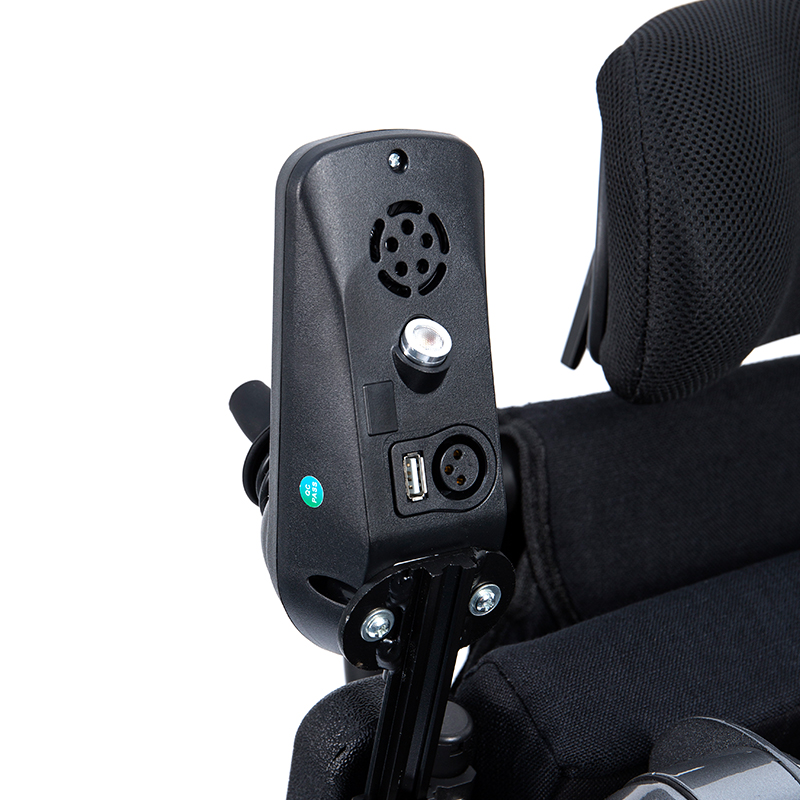
The concept of electronic hand controls extends beyond automobiles. Power wheelchairs and mobility scooters use the same principles to offer independent mobility to individuals with limited lower-body function. A well-calibrated joystick responds to the slightest pressure, allowing users to drive smoothly over sidewalks, through doorways, and up ramps without relying on their legs.
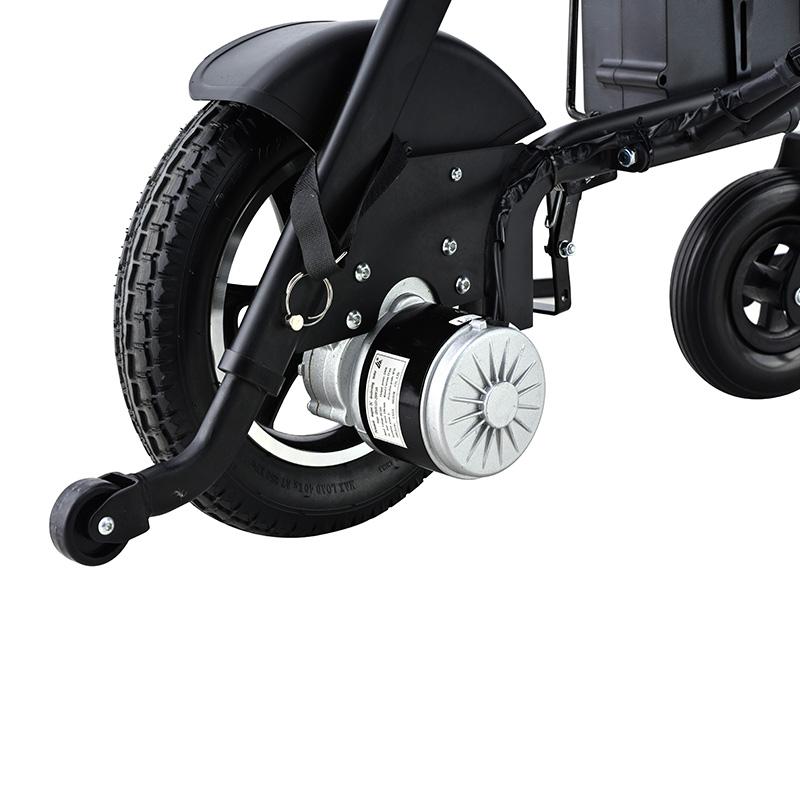
At Heins Medical, we live and breathe this technology. Our YL60217 manual folding intelligent operation comfortable wheelchair uses an electronic joystick that gives you intuitive, low-effort control in a lightweight frame. For users who prefer maximum convenience, the YL9005 automatic folding remote control electric wheelchair takes the same electronic control architecture and adds a remote interface, so you can park, adjust, or retrieve the chair without touching the joystick at all.
 Automatic Folding Remote Control Electric Wheelchair in Lightweight AluminumFeaturing a remote-controlled auto-folding system, this lightweight aluminum wheelchair offers effortless setup. With a powerful motor and ergonomic seating, it enhances independence for users with mobility challenges, ideal for daily travel and rehabilitation.View Product →
 Manual Folding Electric Wheelchair with Intelligent Joystick ControlThis electric wheelchair combines a sturdy steel frame with an ergonomic seat, powered by an efficient motor and long-lasting battery. Its intuitive joystick offers precise control, making it ideal for seniors and those in rehabilitation.View Product →
Mechanical vs. Electronic Hand Controls
Mechanical hand controls are the traditional option. They use a physical lever and linkage system that connects directly to the brake and accelerator pedal. They are simple, durable, and often less expensive to install. They also work on older vehicles that lack drive-by-wire technology.
However, mechanical systems have clear limitations:
- The driver must use more physical force to operate the levers, which can be tiring on long trips.
- The response is linear and fixed, with no way to tune the sensitivity.
- Bulkier hardware under the dashboard can limit legroom and make installation more invasive.
- They do not integrate with electronic stability, traction, or anti-lock braking systems as seamlessly as electronic units.
In contrast, electronic hand controls offer:
- Minimal operating effort, even for users with very low hand strength.
- Adjustable response curves, allowing the installer to match acceleration and braking to your reflexes.
- Smooth, linear control that is easier to master in traffic.
- Compact installation that preserves more interior space.
- Compatibility with modern safety electronics and vehicle diagnostics.
If you value precision, low fatigue, and the ability to customize your experience, electronic hand controls are the better investment. If you simply need a reliable, inexpensive solution for an older vehicle, mechanical controls can still be a sound choice.
How to Choose the Right Electronic Hand Control System
Selecting the right system is a process that involves your physical condition, your vehicle, and your budget. Here is a step-by-step approach that works for most drivers.
- Get an evaluation with a driver rehabilitation specialist. This professional will measure your strength, range of motion, and reaction time. The evaluation is essential for identifying a safe and functional control configuration.
- Test drive different control styles. A lever that works for one person may be uncomfortable for another. Spend time on a track or in a large parking lot trying both drive-by-wire and joystick systems before making a decision.
- Verify vehicle compatibility. Electronic hand controls are designed for modern vehicles with brake-by-wire or electronic throttle systems. Bring your car's make, model, and year to the installer so they can confirm the right hardware and software.
- Choose a certified installer. Proper installation is critical for safety. Look for a technician who has experience with your specific vehicle platform and the control manufacturer you selected.
- Plan for training. Learning to use hand controls takes practice. Schedule several sessions in a safe environment before you hit the highway. Many drivers find that weekly practice for the first month greatly improves their confidence.
- Budget for ongoing maintenance. Electronic systems should be inspected at least once a year. Cables, connectors, and sensor modules can wear out, so factor in routine checks.
If you are also shopping for a mobility scooter or power wheelchair, the same evaluation logic applies. You can read our article on how to choose the right mobility scooter for your lifestyle for a more detailed breakdown of matching a device to your daily needs.
Frequently Asked Questions About Electronic Hand Controls
Q1: Can electronic hand controls be used in any vehicle?
Most electronic hand controls are designed for vehicles with modern drive-by-wire architecture. Older vehicles may require mechanical controls or extensive modifications. A professional installer can confirm compatibility before purchase.
Q2: Are electronic hand controls safe for standard highways and city traffic?
Yes. When installed by a qualified technician, electronic hand controls are subject to the same performance standards as factory pedals. They integrate with the vehicle's electronic stability and braking systems, which means your steering, ABS, and traction control continue to function as they were designed to.
Q3: How long does it take to learn to use electronic hand controls?
Most people require two to four weeks of regular practice to become comfortable. Drivers who already have experience with mechanical hand controls often adapt faster because the physical motion is similar. More advanced joystick systems may take a little longer to master.
Q4: What is the price range for electronic hand controls?
Prices depend on the vehicle, the control type, and the complexity of installation. Drive-by-wire systems generally cost more than mechanical ones. Custom joystick systems are at the higher end. Always request a written quote from your installer before proceeding.
Q5: Can I transfer an electronic hand control system to a new vehicle?
In most cases, yes, but the transfer is not always direct. Some components, such as the mounting bracket and connection cables, must be replaced for the new vehicle model. Consult with the installer to determine whether transferring or buying a new system makes financial sense.
Why Electronic Hand Controls Matter for Your Mobility Independence
Electronic hand controls are about more than just operating a car. They are a bridge to full participation in work, recreation, and social life. When you no longer need to rely on others for a simple drive to the store, your world expands quickly.
The same independence applies to mobility devices. A power wheelchair or scooter with a responsive electronic hand control lets you move through your home, navigate a supermarket aisle, or enjoy an outdoor park without physical strain. This is why we design our products around ergonomic, low-effort controls.
For example, the YL09B folding 4-wheel lightweight mobility scooter with basket uses a twist-grip electronic control that provides smooth acceleration and gentle braking. It is built for users who want a lightweight, portable scooter that still delivers dependable performance for daily errands.
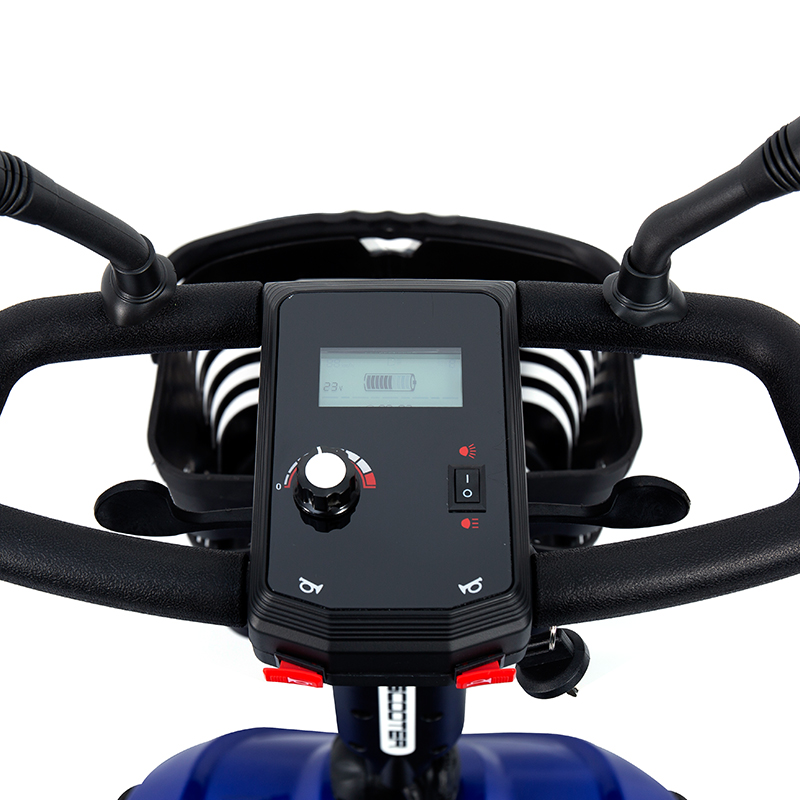 Folding 4-Wheel Lightweight Mobility Scooter with Basket and Ergonomic SeatThis durable steel-frame scooter features an adjustable ergonomic seat, powerful motor, and long-range battery. With intuitive controls and a practical storage basket, it ensures safe, comfortable travel for seniors and users with limited mobility on daily errands.View Product →
Whether you are selecting hand controls for a car, a power wheelchair, or a mobility scooter, the same principles apply: start with an honest assessment, test the feel of the controls, choose a professional installer, and never skip the training phase. With the right system, you can move with confidence, safety, and freedom.
PREV:No previous article
NEXT:Mobility Scooter Charging Safety Tips: Protect Your Battery and Extend Your Ride
NEXT:Mobility Scooter Charging Safety Tips: Protect Your Battery and Extend Your Ride
Interested in cooperation or have questions?
News

-
The information provided on this website is intended for use only in countries and jurisdictions outside of the People's Republic of China.
-
Office Address
Room 315, building5, No.45 Songbei Road, Suzhou area, China Pilot Free Trade Zone
-
Factory Address
No. 2 Shanyan Road, Huzhen Town, Jinyun Country, Lishui, Zhejiang, China
-
Mobile Phone
+86 137 7606 7076
-
Email
taylor.liu@heinsmed.com
Stay Connected
lf you can't find the answer you're looking for, chat with our friendly team.
Mobile
Copyright © Suzhou Heins Medical Equipment Co., Ltd. All Rights Reserved.
Custom Mobility Scooters for Elderly Suppliers
Custom Mobility Scooters for Elderly Suppliers