


 Español
 Deutsch
 عربى
عربى
1. Introduction In modern society, with the increasing trend of population aging and the accelerating pace of life, the importance of means of transpo...
READ MOREThe Mobility Scooter Buying Guide for Seniors: Types, Specs, and Safety
A neighbor was helping her 78-year-old mother choose a mobility scooter. The mother lived on a hilly street, needed to reach a supermarket about 2 km away, and wanted to carry the scooter in a hatchback. That one description eliminated half the models on the market before any price comparison began. A mobility scooter works when it matches the rider's real daily routes, physical support needs, storage space, and a handful of specifications that first-time buyers often ignore. This guide walks through those decisions in the order they matter, so you can compare models with confidence.
Start With the Daily Route, Not the Spec Sheet
Manufacturers publish range, speed, and weight limits, but those numbers only make sense in the context of a rider's routine. Before opening any product page, map the trips the scooter will actually make. A machine that suits a flat shopping center will not necessarily handle a gravel driveway or a steep garage entrance.
- Distance of the longest regular trip - supermarket, clinic, park, or a relative's home.
- Surface types - smooth sidewalks, cracked pavement, loose gravel, grass, or dirt paths.
- Slopes - driveways, curb ramps, and any hilly streets on the route.
- Storage and transport - a garage, a narrow apartment hallway, or a car trunk.
- Rider profile - height, weight, grip strength, balance, and how long they can sit comfortably.
Write those five answers first. They define the scooter class, the battery size, and the chassis design that will genuinely fit the user's life.
Match the Scooter Class to the Use Case
Most mobility scooters fall into three broad classes. Lines between categories differ by manufacturer, but the classes still help narrow the field quickly.
| Class | Typical range | Best surfaces | Typical use |
|---|---|---|---|
| Travel / portable | 10-20 km | Smooth pavement, sidewalks | Shopping trips, tourism, car transport |
| Comfort / everyday | 20-30 km | Sidewalks, light park paths | Daily errands, community visits |
| All-terrain | 25-40 km | Gravel, grass, uneven ground | Rural travel, outdoor recreation |
If the daily route is mostly flat pavement with the occasional curb, a comfort-class scooter will ride better and cost less than an off-road model. If the scooter will go into a car several times a week, portability moves to the top of the priority list. If gravel or grass is unavoidable, look at all-terrain models with larger pneumatic tires and higher ground clearance.
Read These Specs Before Comparing Prices
Advertised numbers describe ideal conditions. Understanding what each figure means will prevent expensive mistakes.
Range
The published range assumes a full battery, moderate temperature, and flat ground. Hills and cold weather can reduce real-world range by 30% or more. If the round trip is 6 km, choose a scooter with at least 12-15 km of published range to keep a comfortable margin.
Climbing ability
Climbing ability is expressed as a percentage. A 12% grade means the scooter climbs 12 cm of vertical rise per metre of forward travel, roughly a 7-degree slope. That covers most curb ramps, parking garage entries, and moderate suburban hills. Steep areas require a verified climbing spec.
Weight capacity
The listed capacity includes the rider plus anything carried in the basket. A 90 kg rider with groceries can reach the limit quickly. Leave at least 15-20 kg of headroom between the expected load and the rated capacity.
Ground clearance
Typical ground clearance ranges from 7.5 cm to 15 cm (3-6 inches). Higher clearance helps on grass and gravel, but it raises the seat height and can make mounting harder for shorter riders.
Range deserves special attention. The YL09S, for example, advertises 20 km of range on a full charge, which is realistic only for flat routes at moderate speed. Treat published numbers as the upper bound, not the average.
 YL-09S Foldable Mobility Scooter with 20 km Range and Ergonomic SeatThis model emphasizes long-range travel and comfort, with a rugged steel frame and adjustable seating. Its advertised 20 km range suits flat daily routes, while the front basket and safety features support errands and leisure rides.View Product →
Climbing ability often separates models that look good on paper from models that perform on the street. The YL08S is rated for a 12% climbing capacity, which makes it a practical choice for hilly neighbourhoods. Two other numbers deserve attention as well. The turning radius determines whether the scooter can navigate a bathroom doorway or a crowded shop aisle. The tire type also matters: pneumatic tires absorb bumps but can puncture; solid tires never go flat but transmit every crack in the pavement to the rider.
 YL-08S Heavy-Duty 4-Wheel Scooter with 12% Climbing and 20 km RangeRated for a 12% climbing capacity, this steel-frame scooter handles hilly streets better than many competitors. Its turning radius and tire type are key details mentioned nearby, and the 20 km range covers typical urban commutes.View Product →
Portability and Storage: The Test Most Buyers Skip
Foldable scooters have changed what is possible for caregivers and travelers. But "foldable" means different things: some frames fold in one step, while others require removing the seat, battery, and tiller. The heaviest remaining module is the number that decides whether one person can load the scooter into a car alone.
- Total weight - lighter is easier, but lightweight scooters often carry smaller wheels and shorter range.
- Folding mechanism - one-step frame fold versus multi-piece disassembly.
- Heaviest module after folding - typically the battery or the rear section, and it must be liftable by the person who will handle it.
- Folded dimensions - compare them against the actual car trunk or storage closet, not a photo.
The YL985S is positioned as a lightweight, portable, foldable travel scooter, which makes it a strong candidate for frequent car trips. Confirm the folded dimensions and the battery removal process before ordering, because these details determine daily usability.
 YL-985S Lightweight Foldable Travel Scooter with Aluminum Alloy FrameWeighing about 17 kg, this aluminum-framed scooter folds quickly for car transport. The passage above notes the importance of confirming folded dimensions and battery removal, which are central to this model's portability appeal.View Product →
Comfort, Adjustability, and Fit
A scooter that does not fit will stay parked. Seat width should allow the hips to sit without pressure on the outer thighs; armrests should support the arms without pushing the shoulders upward; the tiller should reach comfortably without a forward stretch.
Sit, ride, fold, lift. If the scooter fails any of those four tests, no spec sheet can save it.
- Seat width and depth - check that the cushion supports the full thigh.
- Armrests - flip-up armrests make side transfers easier.
- Tiller adjustment - height and angle should suit both standing and seated reach.
- Footboard length - feet should rest naturally with the heels planted.
- Backrest - a higher backrest helps riders with weak trunk stability.
Spend at least 15 minutes sitting on the scooter in the showroom or at the dealer. Knees, wrists, and lower back should feel relaxed at the end of the test, not just at the beginning. Uncomfortable details get worse on a 40-minute ride.
Safety Features and Stability
Stability and braking matter far more than top speed. Four wheels with a wide track reduce the risk of tipping on slopes and uneven ground. Electromagnetic brakes, which engage automatically when the throttle is released, are the standard to insist on.
- Braking - automatic electromagnetic braking plus a manual brake lever for emergencies.
- Anti-tip wheels - rear anti-tip wheels prevent backward tipping on inclines.
- Lighting - a bright headlight and taillight for dawn, dusk, and evening trips.
- Audible warning - a horn or bell loud enough for pedestrians and drivers.
- Reflectors - visible from the front, rear, and both sides.
During a test ride, find a gentle slope and release the throttle. The scooter should slow smoothly and hold its position on the incline without rolling backward. Listen for unusual noises and watch for wobble at full speed.
Budget Beyond the Sticker Price
The purchase price covers roughly half the cost of ownership. Batteries, tires, routine service, and accessories add up over the years a scooter is expected to last.
- Battery replacement - most lead-acid batteries last 1-2 years; lithium batteries last longer but cost more.
- Tire replacement - pneumatic tires wear and can puncture; solid tires last longer but give a harder ride.
- Routine maintenance - brake checks, bearing lubrication, and wiring inspections.
- Delivery and assembly - shipping fees and professional setup if the buyer cannot assemble it.
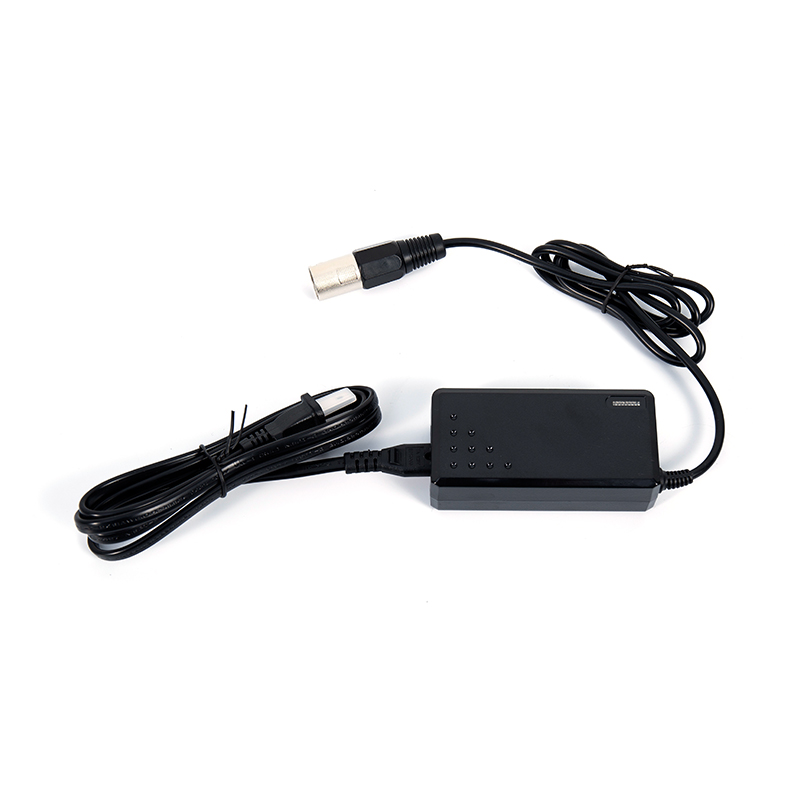
- Accessories - rain covers, rear mirrors, phone mounts, extra baskets, and replacement chargers.
Factor these into the total before choosing. A moderately priced scooter with a quality lithium battery and wider pneumatic tires can cost less over four years than a cheap model that needs early repairs and repeated battery swaps.
Where to Buy and How to Test Ride
Never buy a mobility scooter without physically trying it. Stability, turning behaviour, seat comfort, and the ease of folding cannot be judged from photos or reviews. A reputable dealer will let you ride on different surfaces and will explain the warranty, spare parts availability, and battery replacement cost in writing.
If this is your first purchase, take time to understand how to find, test-drive, and purchase the right mobility scooter before committing. A good test-drive session answers questions no spec sheet can: does the rider feel confident? Can the caregiver lift the heaviest part? Does the turning radius work in narrow spaces?
For distributors, care facilities, and overseas buyers sourcing scooters in volume, the purchasing logic changes. You are not selecting a single unit; you are evaluating a manufacturer's consistency, documentation, and willingness to support customization. Contact the Heins team for model specifications, export terms, and application support.
Frequently Asked Questions
Q1: What is the best mobility scooter for daily senior use?
The best match depends on the rider's route and physical needs. For mostly flat, short trips on sidewalks, a comfortable four-wheel scooter with a folding frame and a published range of at least 20 km is a safe starting point. For hilly neighborhoods, prioritize a verified climbing ability of 10-12% or more.
Q2: Why is the real-world range shorter than advertised?
Published range is measured on flat ground with a fully charged battery and a light load. Hills, headwinds, cold temperatures, heavier riders, and battery age all reduce range, often by 30% or more. Plan routes with a buffer and charge after every trip.
Q3: Can I take a mobility scooter on a plane?
Only with an airline-approved lithium battery and a scooter that folds or disassembles to fit the airline's cargo limits. Many lightweight folding models are designed for this purpose, but you must confirm the specific airline's rules before booking.
Q4: How much should I budget for a quality mobility scooter?
Prices vary widely by class and specification. Plan for the purchase price plus battery replacement within a few years, routine maintenance, and accessories. Ask the seller for the total cost of ownership, including spare parts availability and warranty coverage.
Choosing a mobility scooter is a sequence of small decisions: map the route, match the class, verify the specs, test portability, check comfort, confirm safety, and plan the total budget. Start with the rider's real days rather than the most impressive brochure. A scooter that fits the routine becomes a tool for independence. One chosen purely on price becomes an obstacle. Use the checklist in this guide, bring the rider to the test ride, and let their comfort make the final decision.
PREV:No previous article
NEXT:Exercises for People in Wheelchairs: Complete Strength and Cardio Guide
NEXT:Exercises for People in Wheelchairs: Complete Strength and Cardio Guide
Interested in cooperation or have questions?
News

-
The information provided on this website is intended for use only in countries and jurisdictions outside of the People's Republic of China.
-
Office Address
Room 315, building5, No.45 Songbei Road, Suzhou area, China Pilot Free Trade Zone
-
Factory Address
No. 2 Shanyan Road, Huzhen Town, Jinyun Country, Lishui, Zhejiang, China
-
Mobile Phone
+86 137 7606 7076
-
Email
taylor.liu@heinsmed.com
Stay Connected
lf you can't find the answer you're looking for, chat with our friendly team.
Mobile
Copyright © Suzhou Heins Medical Equipment Co., Ltd. All Rights Reserved.
Custom Mobility Scooters for Elderly Suppliers
Custom Mobility Scooters for Elderly Suppliers