


 Español
 Deutsch
 عربى

1. Introduction In modern society, with the increasing trend of population aging and the accelerating pace of life, the importance of means of transpo...
READ MOREHow to Charge a Mobility Scooter Battery: Complete Guide for Safety & Range
Five minutes after unboxing a new mobility scooter, most riders face the same question: should the battery be fully drained before its first charge, or fully charged before the first ride? The answer depends on the battery chemistry, not on habit. Charging a lithium pack the same way you charge a sealed lead-acid pack is one of the fastest ways to shorten its life. This guide explains the correct charging procedure, realistic charging times, how often to recharge, and the warning signs that tell you the battery needs attention.
Safety First: What to Check Before You Charge
Before you plug anything in, confirm which battery family your scooter uses. Lithium-ion packs appear on modern portable, folding, and long-range models because they provide more capacity per kilogram and tolerate partial charging well. Sealed lead-acid (SLA) packs still appear on budget-friendly and heavier four-wheel models, and they need a stricter routine: avoid deep discharges and do not leave them on continuous trickle charge for days. Lithium-ion is more tolerant, but heat and overvoltage remain the main risks, which is why the original charger matters.
Set up every charging session in a dry, ventilated area. A concrete garage floor or a hallway away from curtains works much better than a closed cupboard in direct sunlight. If the scooter has just finished a demanding ride, especially in summer, let the battery cool for 20 to 30 minutes before charging. Recharging a warm pack increases internal stress and shortens cycle life.
Safety note: never charge a battery that looks swollen, cracked, or damaged. If you smell burning plastic or the charger casing feels unusually hot, unplug everything immediately and stop using the scooter until a qualified technician inspects it.
How to Charge Your Mobility Scooter Battery Step by Step
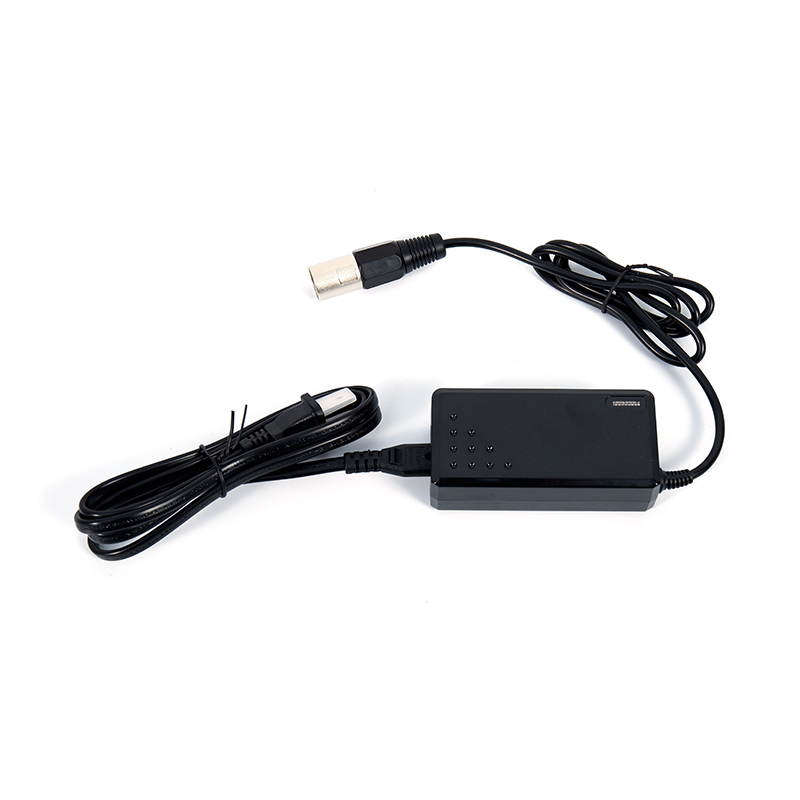
Once the environment is safe, the routine itself is simple. Most mobility scooter chargers use a round barrel connector, and most models manage the charge state automatically. What you need to do consistently is the following:
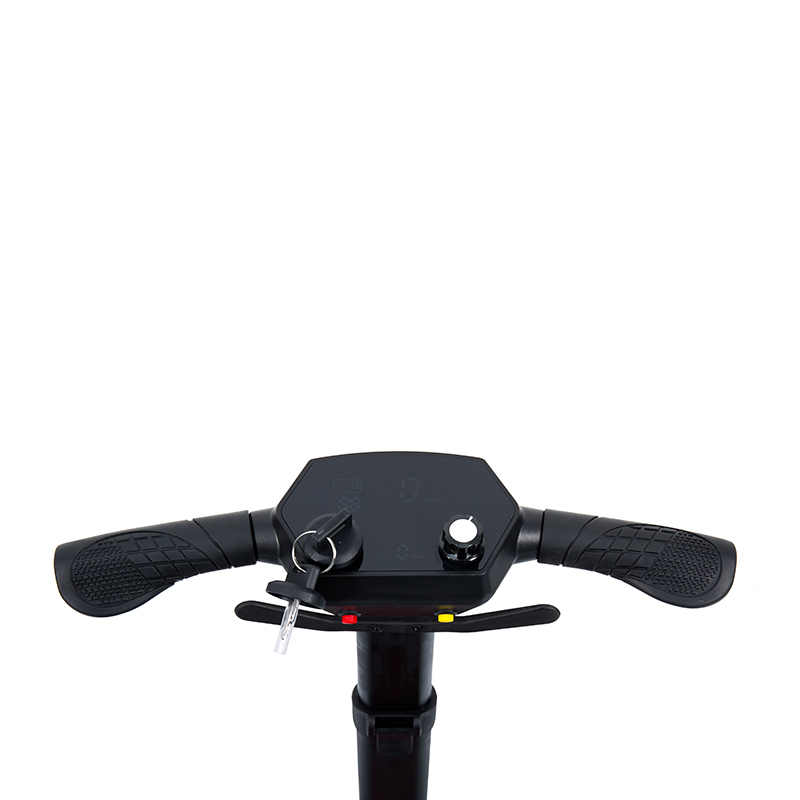
- Turn the scooter power switch to OFF before connecting the charger. Some models also require the key in the OFF position.
- Locate the charging port, usually under the seat, on the tiller, or near the rear wheel arch. Never force the connector into the port.
- Connect the charger to the scooter first, then insert the charger plug into the wall outlet. This order reduces arcing at the connector and is safer for the battery contacts.
- Watch the charger indicator. A red light typically means charging is in progress; a green light means full or standby. Blinking lights indicate a connection problem or a fault condition.
- When charging finishes, unplug the wall side first, then disconnect the barrel connector. Stow the cable loosely; do not wrap it tightly around the charger brick.
3-5 hours typical for lithium-ion mobility scooter packs
6-10 hours typical for sealed lead-acid packs
20-25 °C recommended battery temperature for charging
How Long Does a Mobility Scooter Battery Take to Charge?
Charging time is not a single number that fits every scooter. Three variables define the actual duration: battery capacity in amp-hours, charger output in amps, and the charge curve used by the battery management system. SLA chargers normally follow a three-stage curve called bulk, absorption, and float. The float stage keeps the battery topped up, but it also adds heat, which is why leaving an SLA scooter connected for days is not recommended. Lithium packs rely on the battery management system to cut off at the right voltage, so a modern lithium charger can stay connected safely for several hours after the green light appears.
| Battery type | Capacity | Charger output | Typical charge time | Best practice |
|---|---|---|---|---|
| SLA | 12 Ah | 2 A | 6-8 hours | Charge above 50% |
| SLA | 20 Ah | 4 A | 8-10 hours | Charge above 50% |
| Lithium-ion | 10 Ah | 3 A | 3-4 hours | Top up anytime |
| Lithium-ion | 18-20 Ah | 5 A | 5-6 hours | Top up anytime |
A larger battery means a longer charging window with the same charger. That is why long-range scooters, such as the YL09S folding powered scooter with a rated range of 20 km, need more time on the charger than a compact 12 Ah pack. In daily use the trade-off is worth it: a larger pack lets you skip a charge when you have only used a fraction of the capacity.
 YL-09S Foldable Powered Scooter with 20 km Range for Adults and SeniorsThis long-range scooter suits daily errands and leisure rides. Its larger battery extends charging time, but the pack can handle partial charges, making it easier to top up before capacity drops too low.View Product →
How Often Should You Charge a Mobility Scooter?
Most battery damage does not come from charging too often. It comes from letting a battery sit in an extreme state of charge for too long. The old advice to drain the battery completely before charging belongs to the era of nickel-cadmium cells, which are not used in modern mobility scooters. Lithium packs prefer shorter discharge cycles and can be topped up at any time. SLA packs should be recharged before they drop below about 50% capacity to avoid sulfation.
Use this practical rule: if a daily ride uses about 20% of a full charge, charging every three days is fine for lithium and acceptable for SLA. If the battery indicator is already flashing during a ride, recharge as soon as you arrive home. If the scooter will sit unused for weeks, store the pack at around 40 to 60% charge and top it up once a month to compensate for self-discharge.
Does the Battery Type Change Your Charging Routine?
Battery chemistry also decides how flexible you can be with the charger. The table below summarises the differences that matter in real use.
| Property | Lithium-ion | SLA |
|---|---|---|
| Weight | Light | Heavy |
| Cycle life | 800-1,500 cycles | 300-500 cycles |
| Typical charge time | 3-6 hours | 6-10 hours |
| Self-discharge | Low | Higher |
| Maintenance | No regular work | Occasional terminal cleaning |
| Best for | Portable and travel scooters | Budget and local use models |
| Cost | Higher | Lower |
High power draw adds another layer. Riding on a slope or thick gravel pulls much more current from the battery than riding on flat pavement. The pack voltage drops faster, and internal temperature rises. The same is true when a heavy-duty model has to climb a steep ramp. The YL08S, for example, is rated for a 12% climbing capacity, which is exactly the kind of demanding discharge that needs disciplined charging: charge it in a cool place and keep the battery above 20% before setting off on a slope.
 YL-08S Heavy-Duty 4-Wheel Folding Mobility Scooter with 12-Degree ClimbThis sturdy scooter handles slopes and uneven terrain, but climbs pull extra current from the battery. Charging in a cool place and avoiding deep discharges help preserve pack health during demanding rides.View Product →
Simple Charging Habits That Extend Battery Life
Six habits prevent most avoidable battery problems. None of them require special tools, only consistency.
- Charge at room temperature whenever possible. Cold charging slows the chemical reaction; hot charging accelerates ageing.
- Use the charger that came with the scooter, or an exact replacement specified by the manufacturer. A different voltage can trigger protection circuits or damage cells.
- Unplug the scooter once the green light appears. Leaving it on the charger for days slowly stresses both the battery and the charger.
- For SLA packs, recharge after every ride. For lithium packs, partial charges are fine and often preferable.
- Wipe the charging contacts occasionally with a dry cloth. Corrosion on the connector increases resistance and slows charging.
- If you store the scooter folded in a car boot or a closet, run a short refresher charge every four to six weeks. Stored batteries self-discharge slowly, and a lithium pack left at 5% for months can lose capacity permanently.
These points are easier to remember when you connect charging to the overall health of the scooter, not just the daily range. A more detailed discussion appears in our separate guide on how to maximize mobility scooter battery lifetime and driving range.
What If Something Seems Wrong?
Even with a consistent routine, a charger or battery can behave strangely. The symptom usually tells you where to look.
- The charger indicator stays dark: check the wall outlet, the fuse, and the charger cable. If all of those pass, the charger itself may have failed.
- The light turns green after a few minutes: on lithium packs this often signals a weak cell group; on SLA packs it can mean the battery lost capacity and cannot accept a normal charge.
- The range drops sharply: check tyre pressure and brake drag first, then fully charge and ride a known test route. If the range loss stays above 30%, the pack is probably near the end of its cycle life.
- The battery case feels swollen or warm at rest: stop charging and contact your supplier. Do not try to salvage a swollen lithium cell.
A travel scooter adds another layer. Consider the YL985S lightweight portable folding travel scooter: it is easy to lift into a car boot, which means it often gets charged right after being carried out of a warm vehicle or immediately before a trip. That habit can reduce battery reliability if the pack never reaches a stable temperature. Charge it at home, and give the pack time to reach room temperature before connecting the charger.
 YL-985S Lightweight Portable Folding Travel Scooter with Aluminum FrameThis 17 kg travel scooter folds quickly for car transport, yet portable use means it may be charged after being moved. Letting the lithium pack reach room temperature before charging helps maintain reliability.View Product →
FAQ: Mobility Scooter Battery Charging Questions
Q1: Is it OK to charge a mobility scooter battery every night?
Charging overnight is acceptable if the charger handles automatic cutoff, which most lithium chargers do. For SLA packs, habitual overnight trickle charging can cause heat build-up and gradual plate corrosion, so the safer habit is to charge during the day and unplug once the indicator turns green.
Q2: How do I know when the battery needs to be replaced?
Look for three signs: the range drops noticeably after a full charge, the charger reaches the green light much faster than it used to, or the battery voltage falls quickly under load. If those symptoms appear together, the pack has reached the end of its useful service life.
Q3: Can I use a higher-amp charger to make charging faster?
Only if the manufacturer explicitly states that the battery can accept a higher charge current. Charging at double the specified current can overheat the pack, reduce cycle life, and create a serious safety risk with lithium cells.
Q4: Should I fully empty my mobility scooter battery before charging?
No. Modern lithium packs prefer partial cycles, and SLA packs suffer from deep discharge. Charging from about 30 to 80% on a lithium pack is less stressful than charging from 0 to 100% every time.
Charging a mobility scooter battery is a small daily routine with an oversized effect on long-term reliability. Know your battery type, charge in a cool dry place, use the original charger, and react early when indicator behaviour changes. If a problem shows up or you need a battery recommendation for your model, the Heins support team can confirm the exact procedure for your scooter. Feel free to contact our support team.
PREV:No previous article
NEXT:The Mobility Scooter Buying Guide for Seniors: Types, Specs, and Safety
NEXT:The Mobility Scooter Buying Guide for Seniors: Types, Specs, and Safety
Interested in cooperation or have questions?
News

-
The information provided on this website is intended for use only in countries and jurisdictions outside of the People's Republic of China.
-
Office Address
Room 315, building5, No.45 Songbei Road, Suzhou area, China Pilot Free Trade Zone
-
Factory Address
No. 2 Shanyan Road, Huzhen Town, Jinyun Country, Lishui, Zhejiang, China
-
Mobile Phone
+86 137 7606 7076
-
Email
taylor.liu@heinsmed.com
Stay Connected
lf you can't find the answer you're looking for, chat with our friendly team.
Mobile
Copyright © Suzhou Heins Medical Equipment Co., Ltd. All Rights Reserved.
Custom Mobility Scooters for Elderly Suppliers
Custom Mobility Scooters for Elderly Suppliers