


 Español
 Deutsch
 عربى
عربى
1. Introduction In modern society, with the increasing trend of population aging and the accelerating pace of life, the importance of means of transpo...
READ MOREHow Does Insurance Actually Decide Who Qualifies for a Mobility Scooter?
How Medicare Classifies Mobility Scooters as Durable Medical Equipment
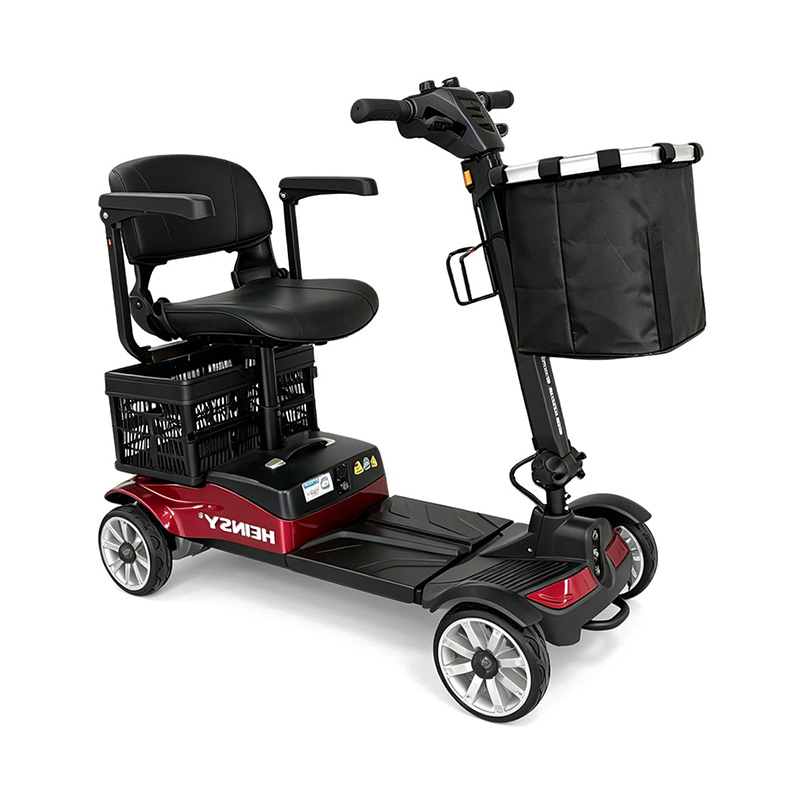
Medicare does not treat mobility scooters as a lifestyle purchase. They fall under a category called Durable Medical Equipment, or DME, which also includes wheelchairs, hospital beds, and oxygen equipment. To qualify for this classification, a device has to meet a specific set of conditions: it must be able to withstand repeated use, serve a medical purpose, be appropriate for use in the home, and generally not be useful to someone who isn't sick or injured.
This classification matters because it determines which insurance rules apply. Once a scooter is confirmed as DME, it becomes eligible for partial reimbursement under Medicare Part B, rather than being excluded as an optional comfort item. The distinction between "medically necessary" and "convenient" is where most approval decisions are actually made.
Medicare Part B Rules: Qualifying for a Covered Scooter
Medicare Part B is the primary pathway for scooter reimbursement, and it typically covers 80 percent of the approved cost once the annual Part B deductible has been met. The remaining 20 percent is the patient's responsibility, unless a supplemental plan covers the difference.
Approval is not automatic. A physician has to document that the person has a mobility limitation that significantly interferes with daily activities inside the home, such as bathing, dressing, or moving between rooms. The physician also has to confirm that a cane or walker is not sufficient, and that the person has the physical and cognitive ability to safely operate a scooter.
- A face-to-face medical evaluation within a defined window before the order is written
- A written order describing the specific mobility limitation
- Proof that the home layout can accommodate the equipment
- Confirmation that a cheaper device, like a manual wheelchair, would not meet the need
These steps exist because DME spending has historically been vulnerable to overuse. Insurers respond by requiring layered documentation rather than a single form.
Medicaid Coverage: What Varies by State
Medicaid is administered at the state level, so coverage details differ more than most applicants expect. Every state Medicaid program is required to cover medically necessary DME for eligible enrollees, but the definition of "medically necessary," the list of approved suppliers, and the prior authorization process can look quite different from one state to another.
Some states require a separate Medicaid-specific prior authorization even if Medicare has already approved the equipment. Others accept the Medicare determination as sufficient evidence. A few states cap the dollar amount they will reimburse for a single piece of mobility equipment, which can affect which scooter models a supplier is willing to offer through that program.
For dual-eligible individuals who qualify for both Medicare and Medicaid, Medicaid often steps in to cover the remaining 20 percent that Medicare does not pay, effectively reducing out-of-pocket cost to near zero. This is one of the more overlooked benefits of dual eligibility.
Comparing Coverage Options at a Glance
| Program | Typical Coverage | Key Requirement | Estimated Out-of-Pocket |
|---|---|---|---|
| Medicare Part B | 80 percent after deductible | In-person exam plus written order | 20 percent of approved amount |
| Medicaid | Varies by state, often near full | State-specific prior authorization | Minimal to none for eligible enrollees |
| Private or Supplemental Plan | Depends on policy, may cover Medicare gap | DME rider included in the plan | Copay or coinsurance per plan terms |
These figures are general ranges. Actual reimbursement depends on the specific plan, the supplier's contracted rate, and whether the equipment is classified as rented or purchased.
The Prescription and Documentation Path
The process of getting an electric mobility scooter approved follows a fairly consistent sequence across most insurers, even when the underlying rules differ. Understanding the order of operations helps applicants avoid the most common delay, which is submitting paperwork out of sequence.
Each step depends on the one before it. A written order dated before the qualifying exam, for example, is one of the most frequent reasons a claim gets returned for correction rather than denied outright.
What You Actually Pay: Costs Beyond the Insurance Check
Even with approval, few applicants pay nothing at all. Understanding the full cost picture prevents surprises after delivery.
- The coinsurance percentage not covered by the primary payer
- Any remaining deductible for the plan year
- Delivery, setup, and basic maintenance fees some suppliers charge separately
- Battery replacement, which is often excluded from the original claim
- Optional accessories such as weather covers or upgraded seating
Renting versus purchasing also changes the math. Some insurers default to a rental arrangement for a set number of months before ownership transfers, which spreads cost differently than an outright purchase claim.
Why Claims Get Denied and How to Strengthen Your Case
Denials are rarely about the equipment itself. They are almost always about incomplete or inconsistent documentation. The most common triggers include a written order that does not match the physician's exam notes, a home assessment that was never completed, or equipment ordered before the required face-to-face visit took place.
Appeals are possible in nearly every case, and a meaningful share of initial denials are overturned once the missing documentation is supplied. Keeping copies of every exam note, order, and supplier communication in one file makes the appeal process significantly faster.
Other Ways to Reduce the Cost
For people who do not qualify through Medicare or Medicaid, or who are waiting on an approval, several other paths exist. Nonprofit organizations focused on disability or aging services sometimes maintain loaner equipment programs. Some community health centers coordinate short-term equipment exchanges. State vocational rehabilitation programs may also assist working-age individuals whose mobility limitation affects employment.
These options will not replace insurance coverage for long-term use, but they can bridge the gap while a formal claim is being processed.
Frequently Asked Questions
Q1: Will Medicare pay for a mobility scooter if I only have trouble walking long distances?
Not usually. Medicare requires that the mobility limitation interfere with activities inside the home, not just long-distance walking outside it.
Q2: Does Medicaid cover mobility scooters the same way in every state?
No. Coverage rules, prior authorization steps, and reimbursement caps are set individually by each state Medicaid program.
Q3: Can I get a scooter covered without a doctor visit?
No. A documented, in-person medical evaluation is a required step for both Medicare and most Medicaid programs.
Q4: What happens if my claim is denied?
You can file an appeal with additional supporting documentation. Many denials are overturned once missing paperwork is provided.
Q5: Is there a way to get a mobility scooter at no cost?
Full no-cost access is uncommon, but dual-eligible enrollees, nonprofit loaner programs, and certain state assistance programs can significantly reduce or eliminate out-of-pocket cost.
PREV:How to Choose a Lightweight Folding Mobility Scooter for Airline and Car Travel
NEXT:What Are Steering Wheel Spinner Knobs: Safe Adaptive Driving Solutions for Mobility Device Users
NEXT:What Are Steering Wheel Spinner Knobs: Safe Adaptive Driving Solutions for Mobility Device Users
Interested in cooperation or have questions?
News

-
The information provided on this website is intended for use only in countries and jurisdictions outside of the People's Republic of China.
-
Office Address
Room 315, building5, No.45 Songbei Road, Suzhou area, China Pilot Free Trade Zone
-
Factory Address
No. 2 Shanyan Road, Huzhen Town, Jinyun Country, Lishui, Zhejiang, China
-
Mobile Phone
+86 137 7606 7076
-
Email
taylor.liu@heinsmed.com
Stay Connected
lf you can't find the answer you're looking for, chat with our friendly team.
Mobile
Copyright © Suzhou Heins Medical Equipment Co., Ltd. All Rights Reserved.
Custom Mobility Scooters for Elderly Suppliers
Custom Mobility Scooters for Elderly Suppliers